Photography and travel
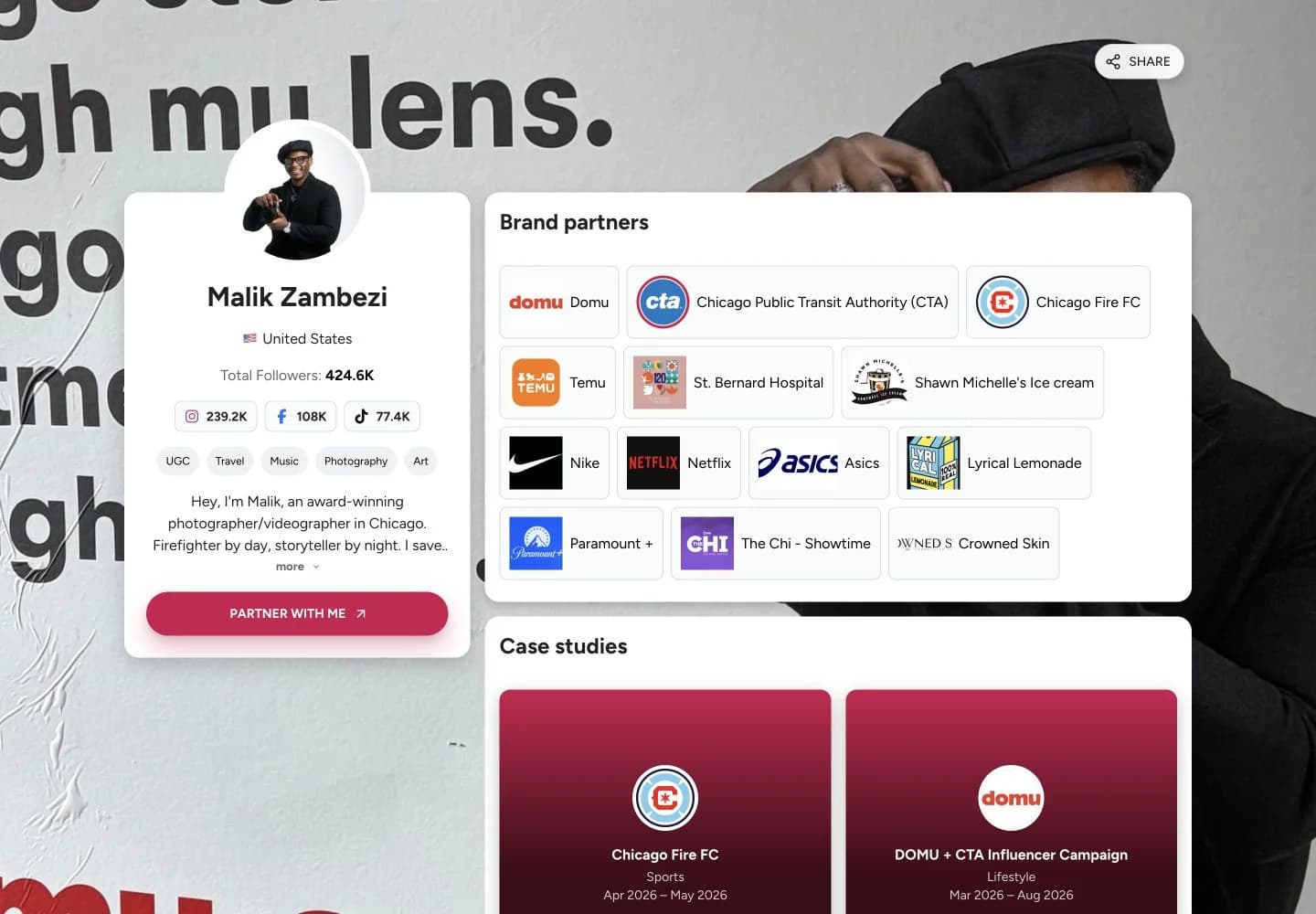
Malik Zambezi
Malik illustrates his photography and interview-based storytelling with Chicago Fire FC and DOMU case studies. Each explains his role, lists deliverables and includes campaign posts.
A media kit brings together the information a potential partner or journalist needs about you. Compare creator, UGC, publisher and company examples, with previews, source links and practical ideas for your own.
These examples were selected for their clear layouts and useful presentation of work, audiences or brand resources.
Jump to a category
Compare creator profiles, campaign examples and audience information across CreatorsJet kits and independently designed websites. Each preview highlights a different way to present a creator’s work.
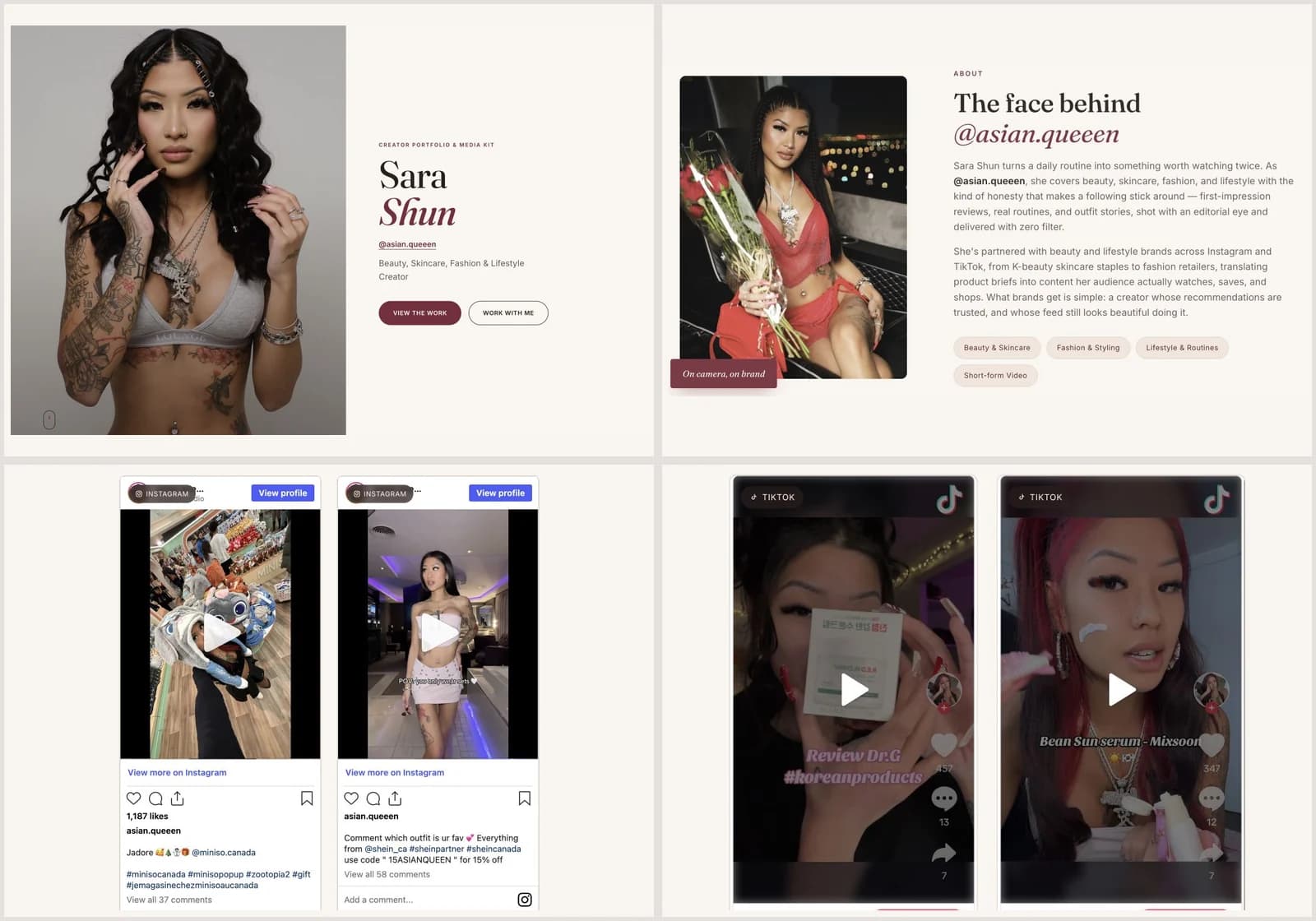
Sara labels campaign previews by brand and platform. Links to the original Instagram and TikTok posts let brands see the finished work.
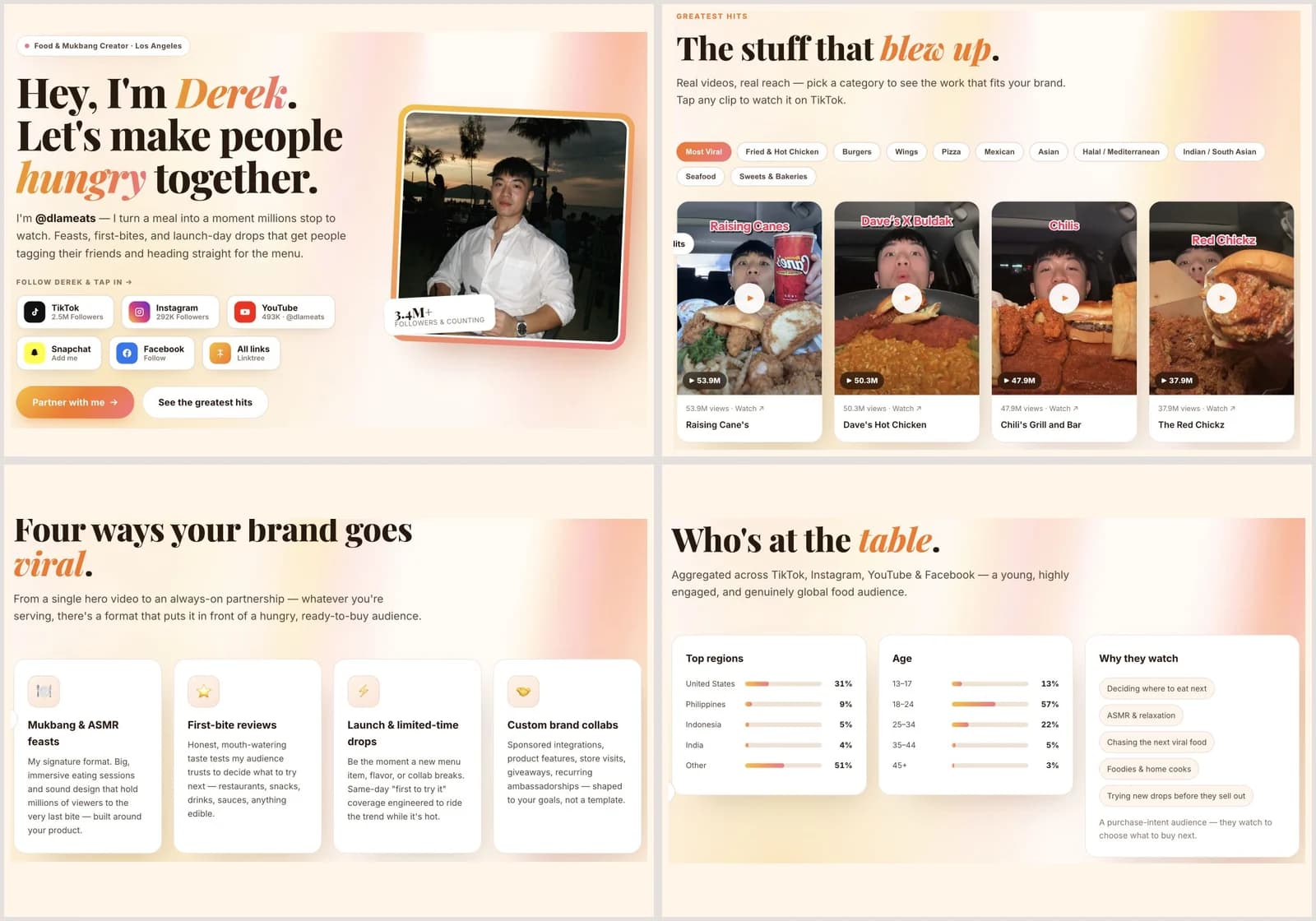
Derek groups food videos by category and separates collaboration formats from audience information. The thumbnails give restaurants and food brands a quick view of his style.
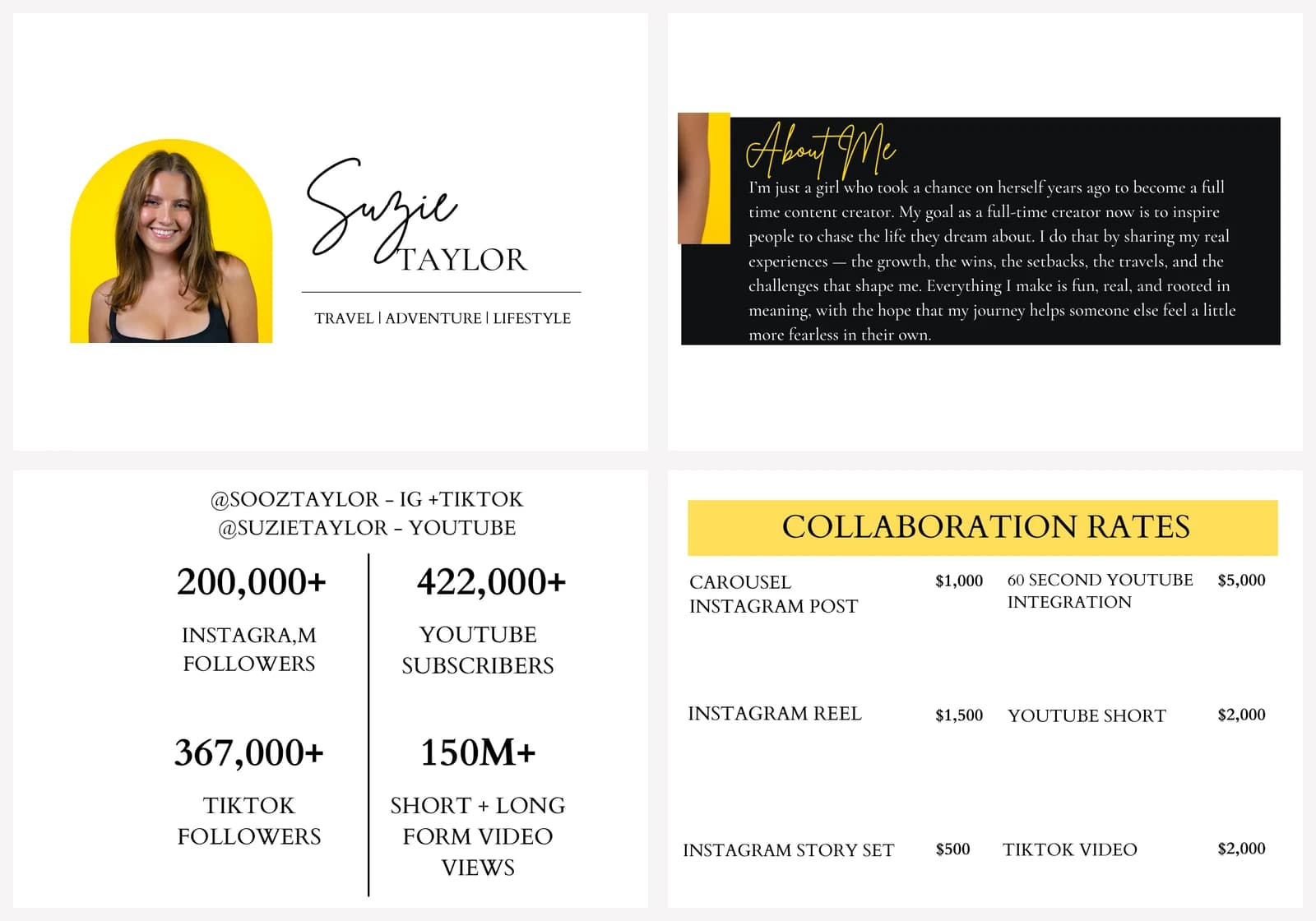
Suzie fits her travel and lifestyle introduction, audience breakdown and rates onto one page. Clear sections keep the essentials easy to scan.
These kits from Vanity Fair, GQ, Vogue, The Guardian, National Geographic and Outside show how publishers present their editorial identity, audience and advertising options. Their scale differs from a creator’s, but their structure offers useful ideas.
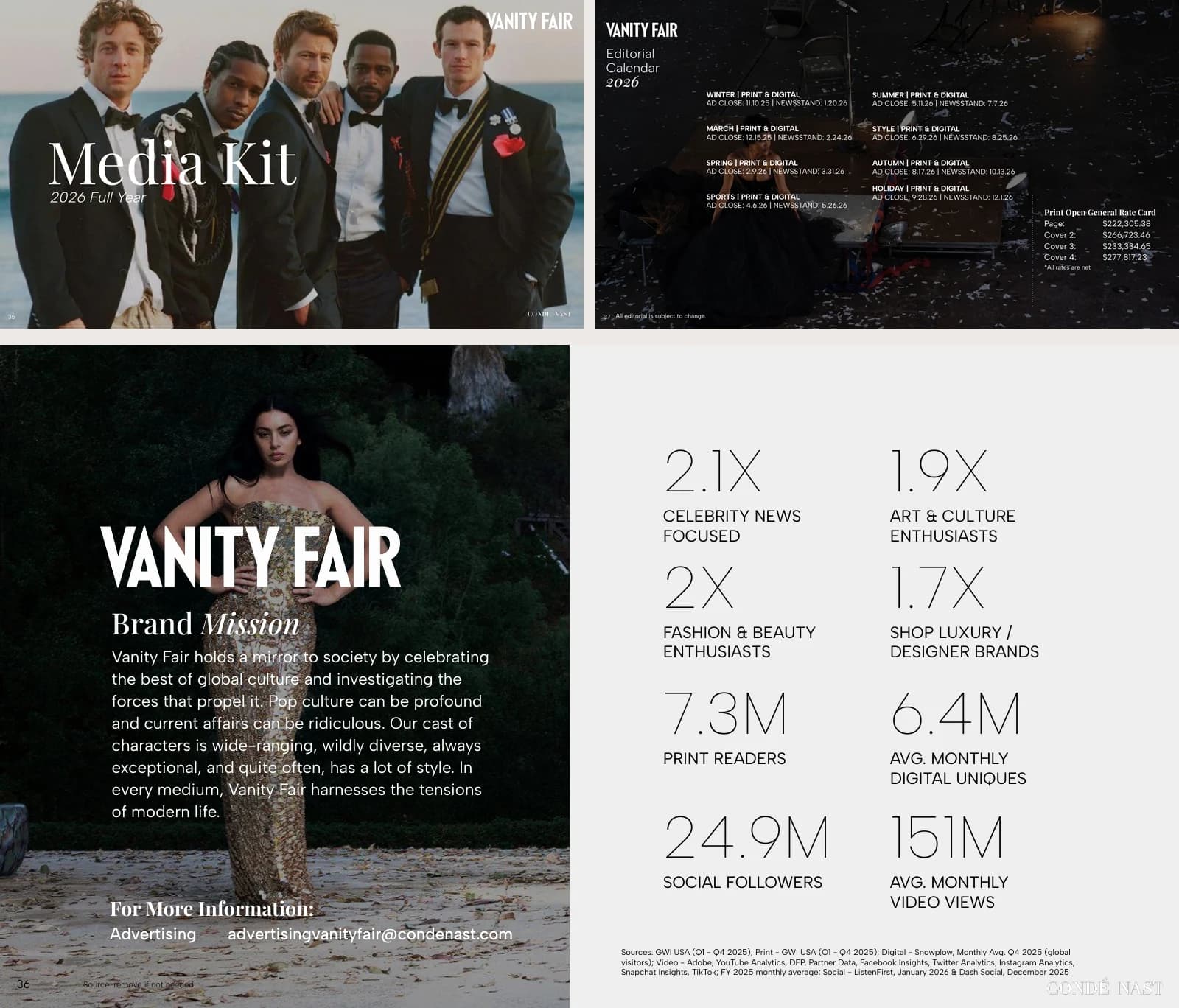
Vanity Fair pairs its cultural identity with audience figures, an editorial calendar and advertising options. Partners can see both who it reaches and what they can book.
View the original media kit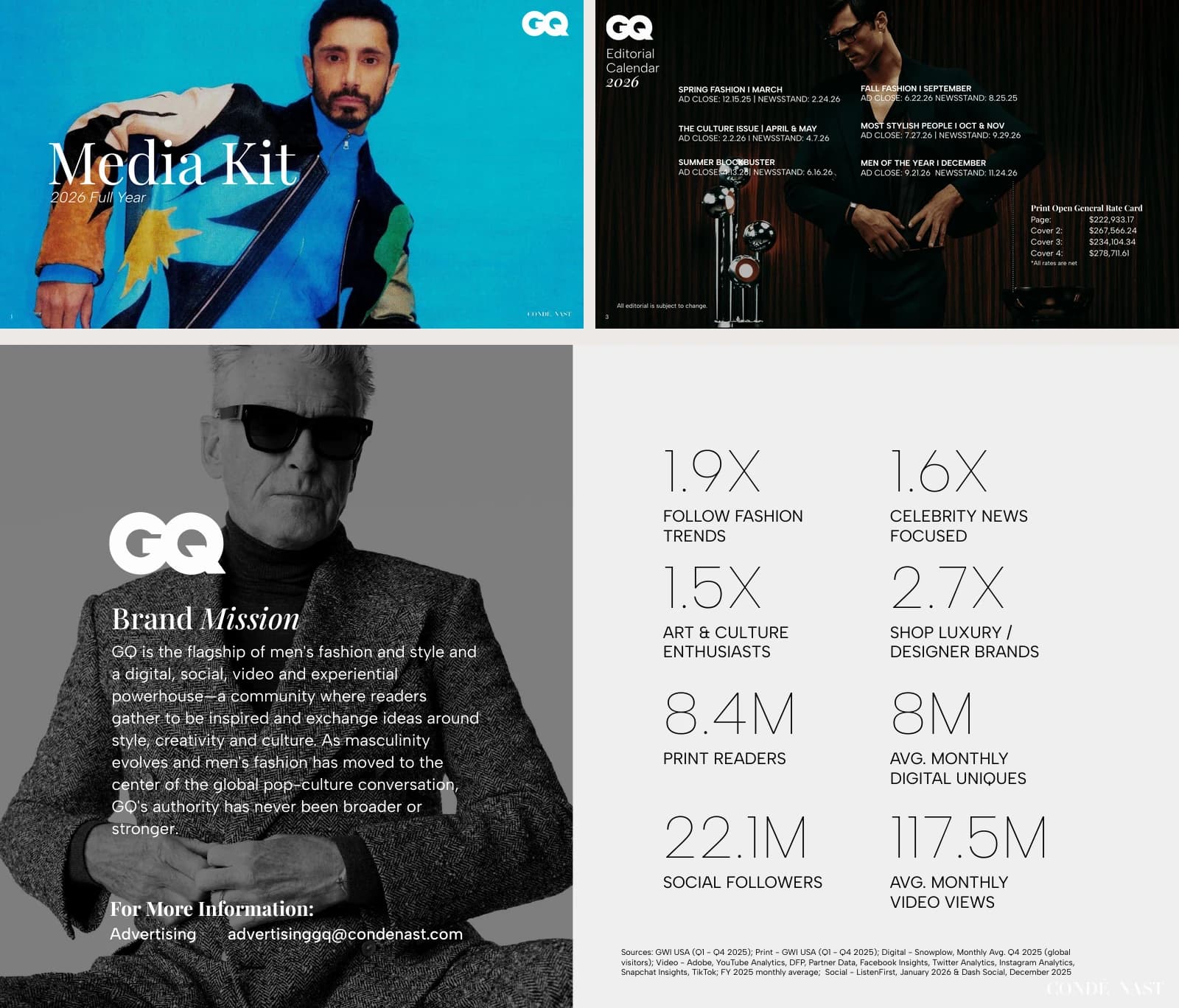
GQ highlights audience interests such as luxury shopping, art and culture alongside its fashion positioning. These details help advertisers assess relevance beyond audience size.
View the original media kit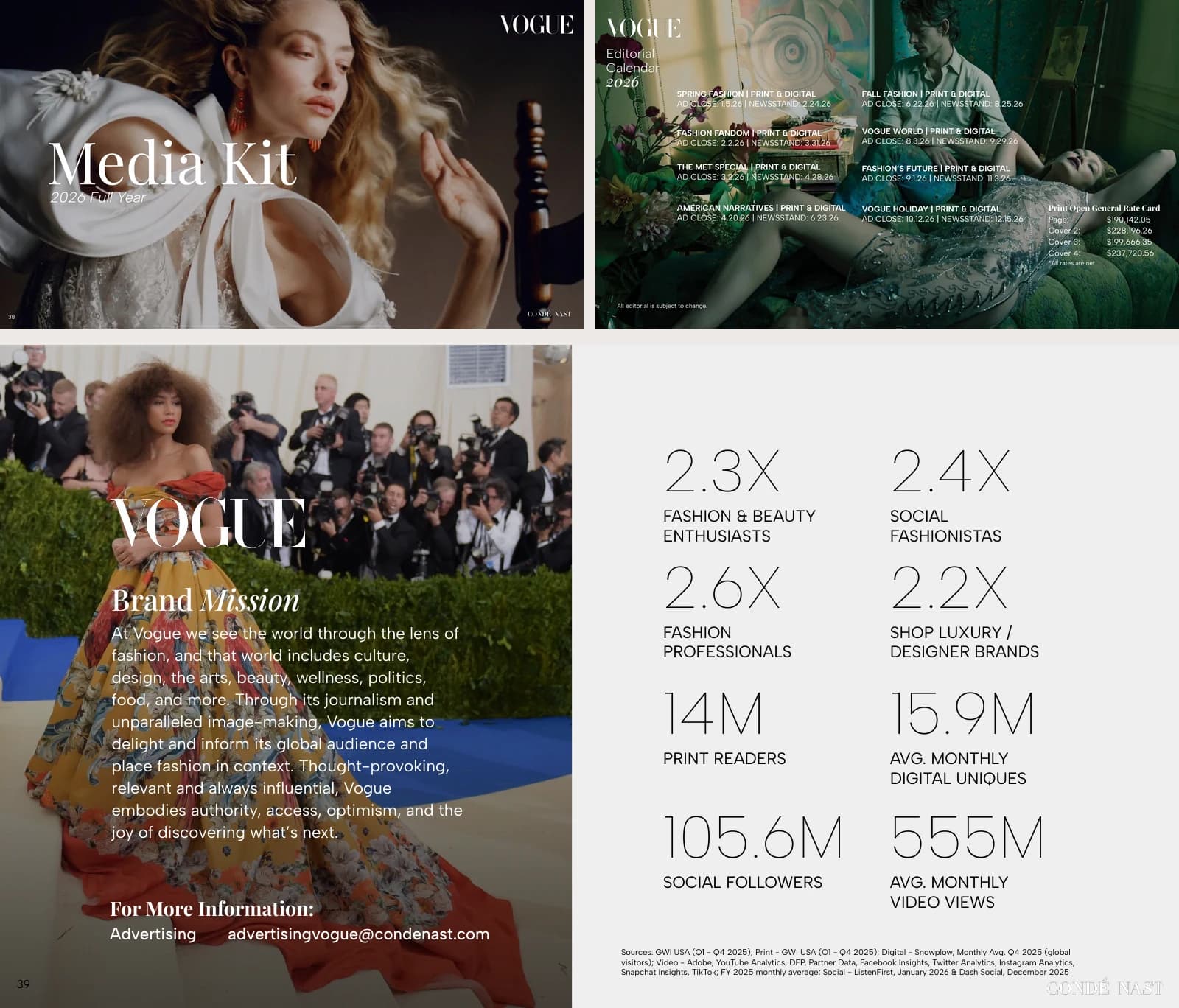
Vogue separates print, digital, social and video figures, with sources and reporting periods. The labels make it clear what each number measures.
View the original media kit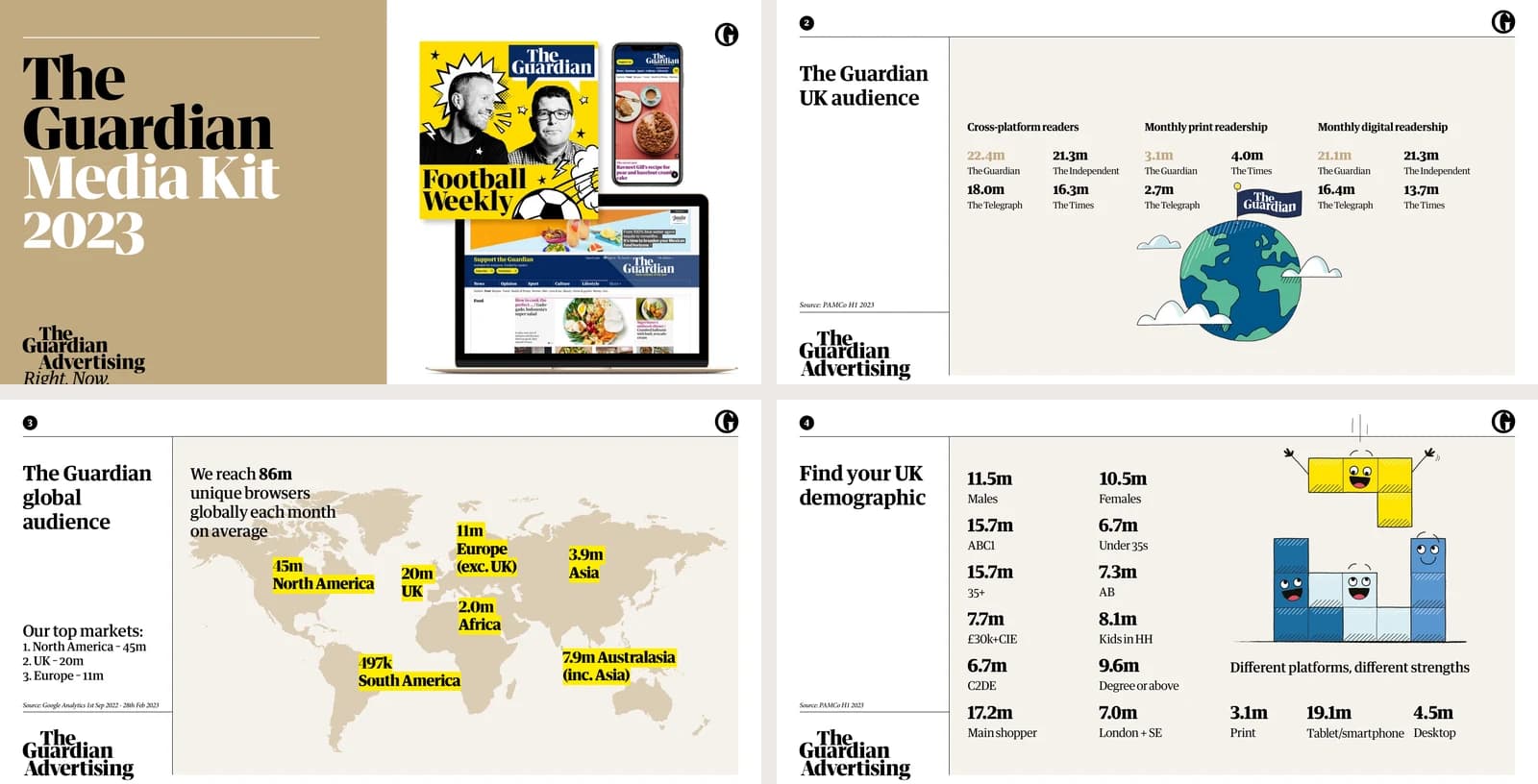
The Guardian separates UK readership, global reach and demographics into clearly labeled pages. The geographic breakdown helps advertisers find the audience relevant to their campaign.
View the original media kit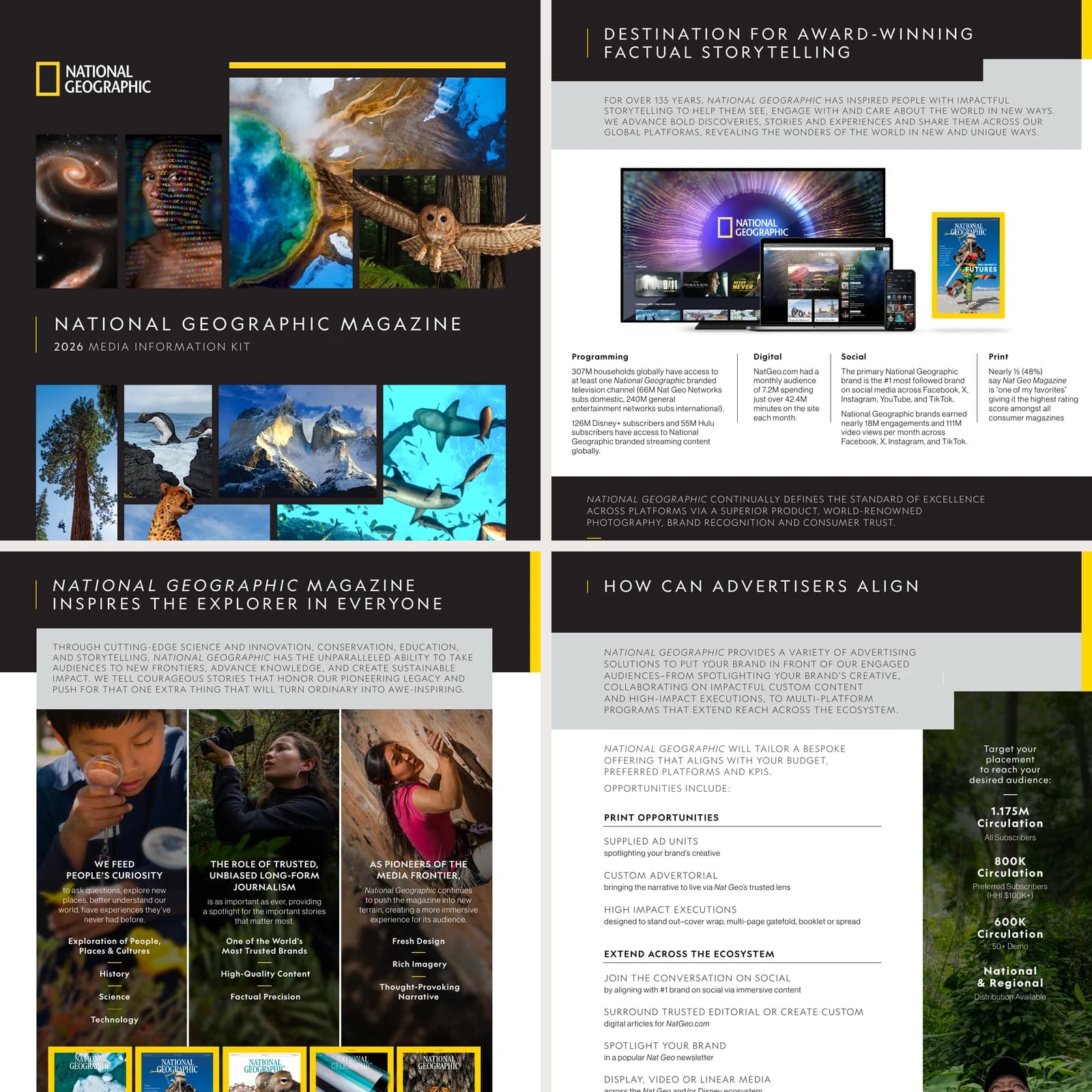
National Geographic leads with photography, then presents print, digital and social advertising formats. The kit connects its visual identity to concrete campaign options.
View the original media kit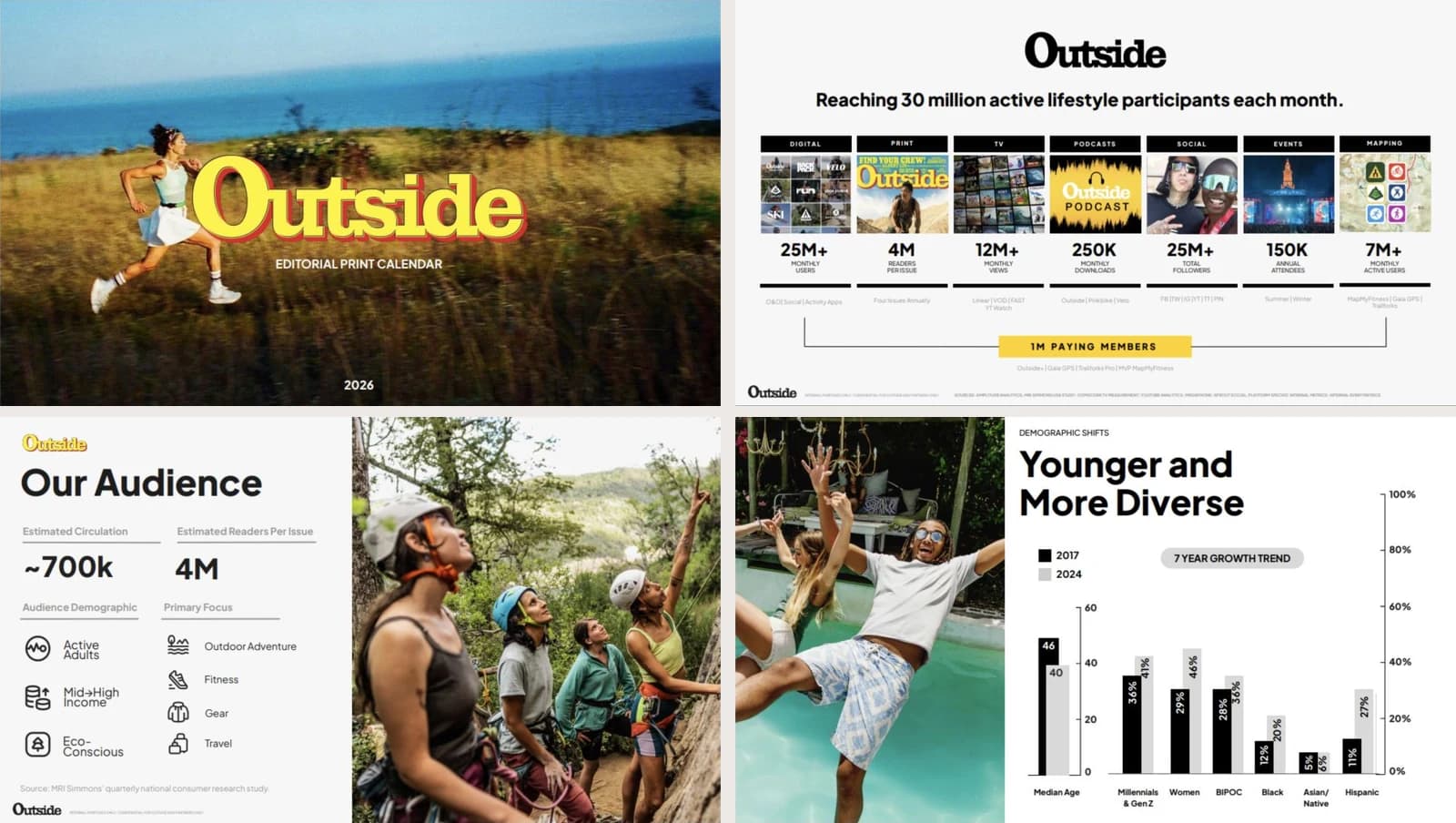
Outside combines outdoor imagery with reader interests and channel figures. It distinguishes circulation from readers per issue, giving each audience number a clear meaning.
View the original media kitA UGC kit helps a brand understand the content it can commission. Work samples, deliverables and how to get started can matter more here than follower numbers.
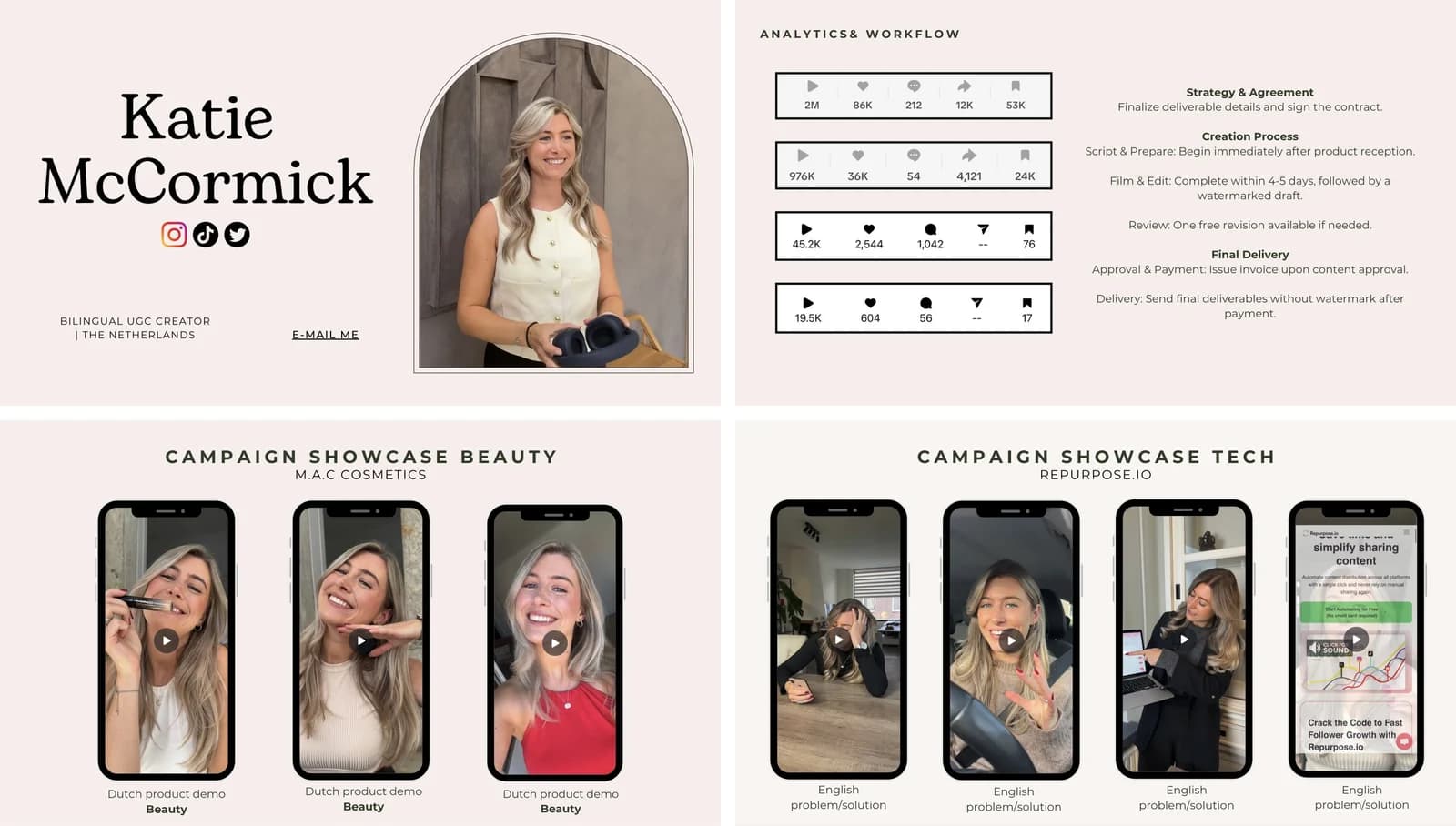
Katie labels her Dutch and English videos by format and industry. A separate workflow explains the steps from agreeing on deliverables to final delivery.
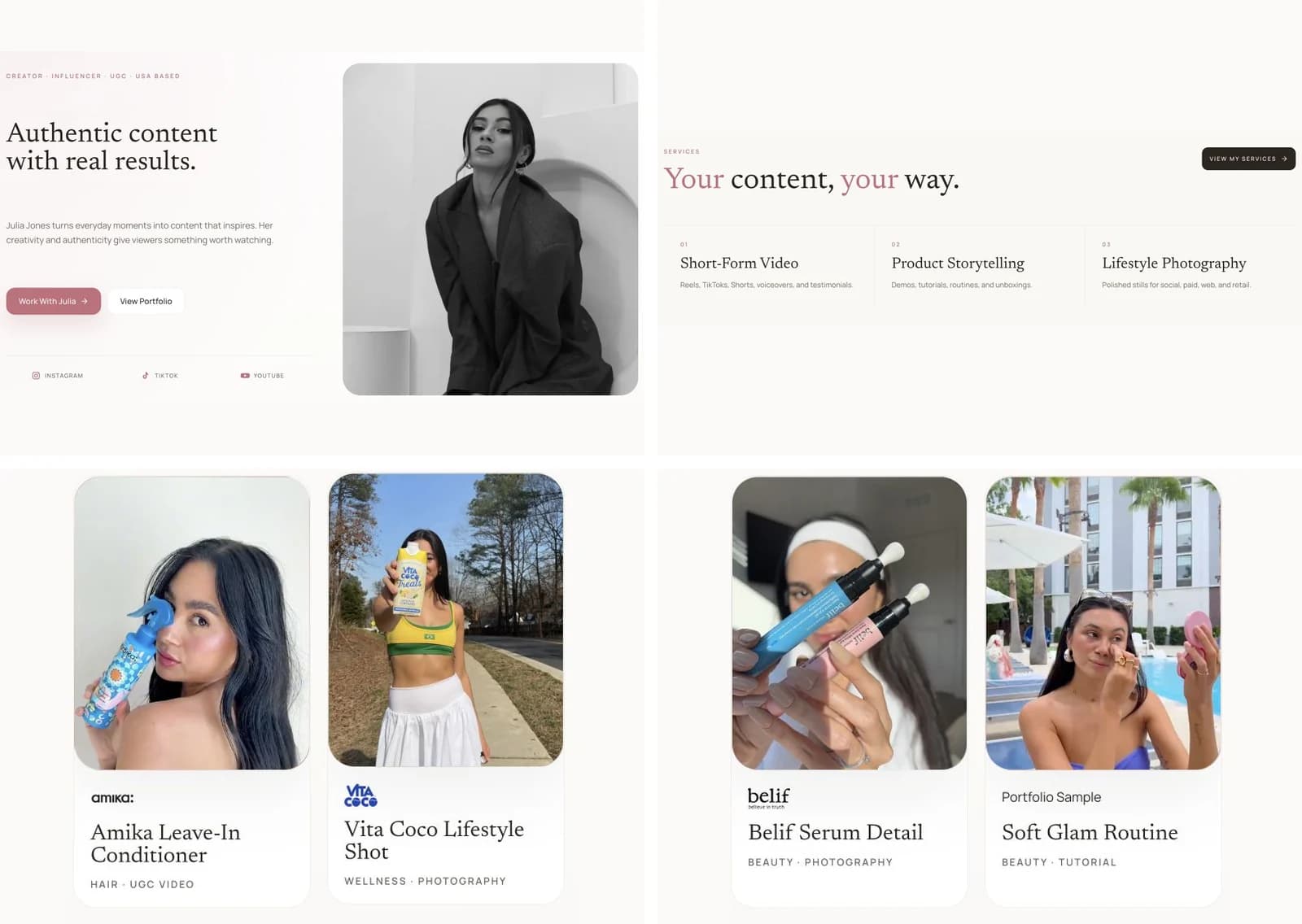
Julia combines product videos with beauty and lifestyle photography. Project labels identify the brand or portfolio sample and the type of content.
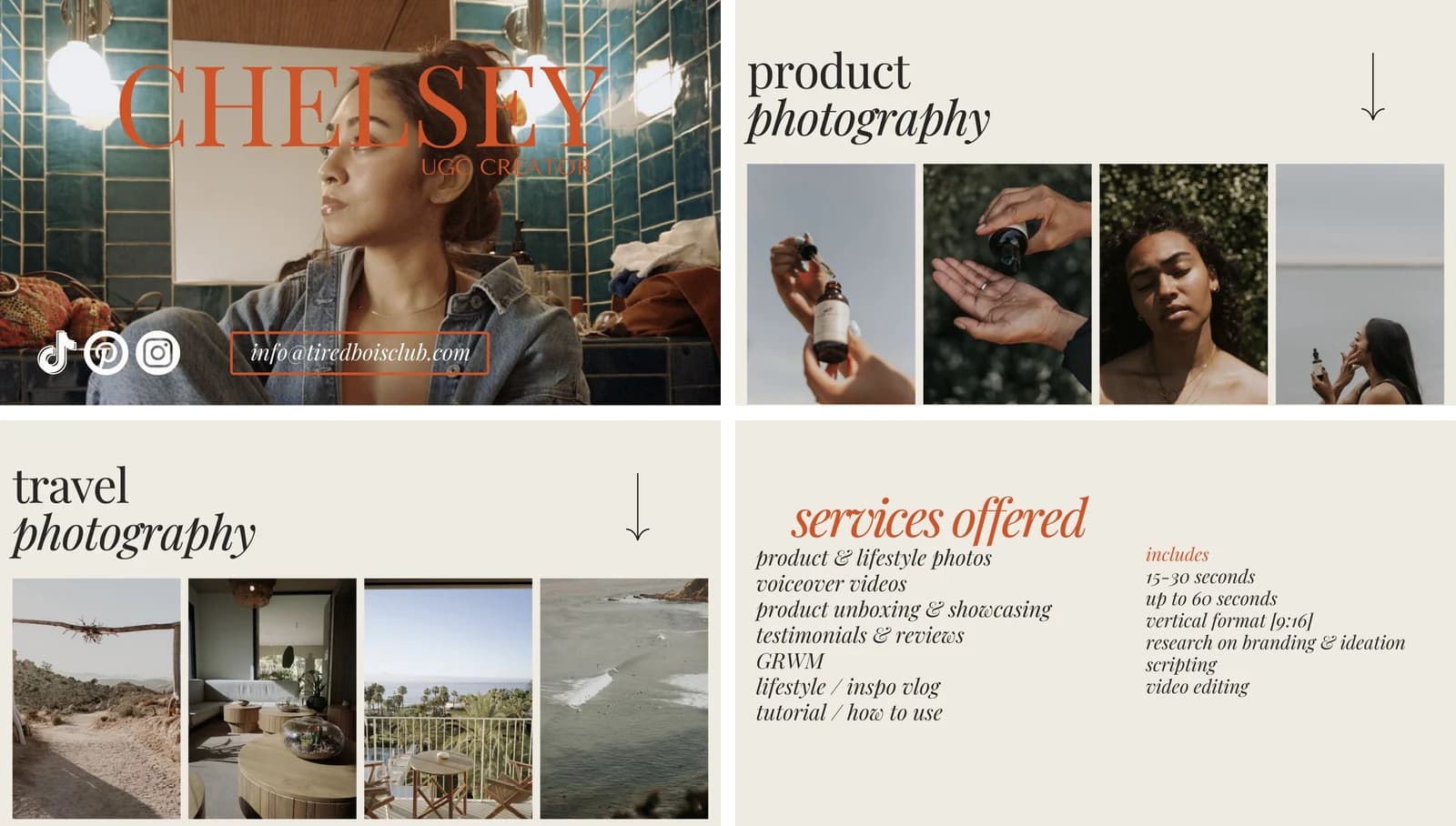
Chelsey separates product photography from travel photos and videos. Her services explain the formats available and the production stages, from research and scripting to editing.
Company media kits help journalists cover a business. They often include an overview, press contacts, logos and photographs. These examples also include press rooms and brand asset libraries, which focus on making the right information and visuals easy to find.
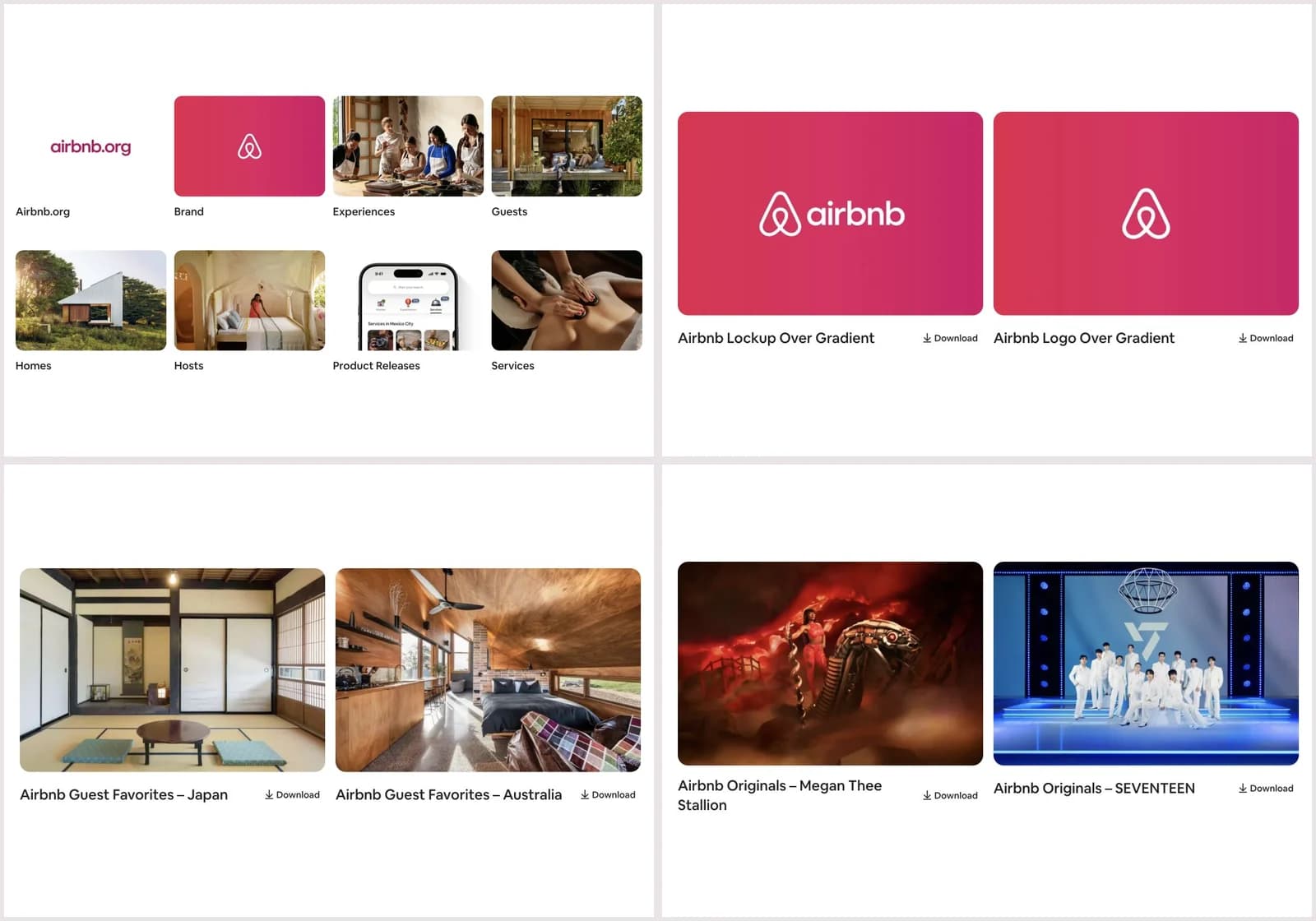
Airbnb organizes photographs and brand assets into visual collections for homes, hosts and experiences. The categories help journalists find an image that fits their story.
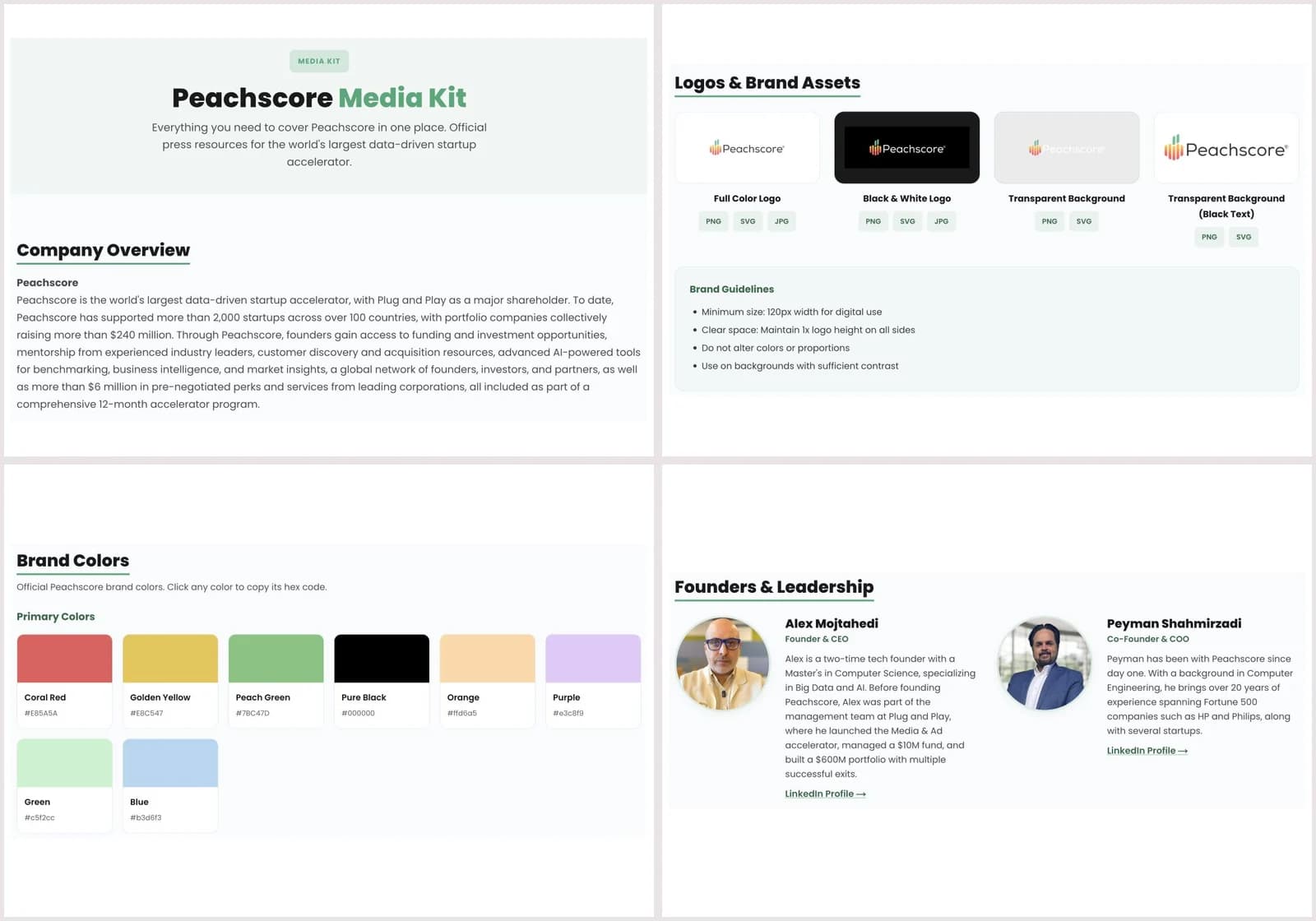
Peachscore groups its company overview, logos, brand colors, leadership profiles and press contacts under clear headings. Visitors can find a specific asset without reading the whole kit.
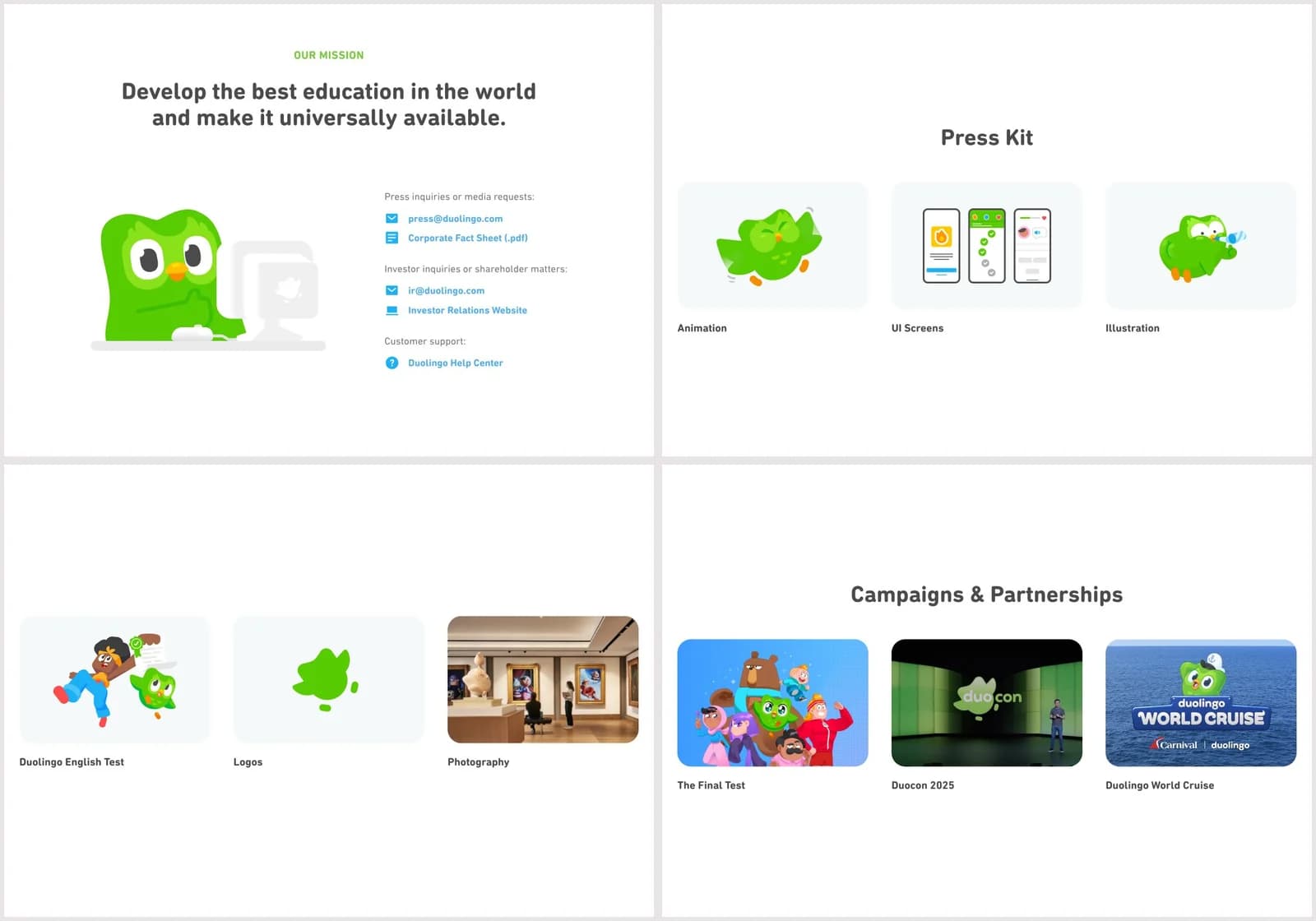
Duolingo groups logos, animations, app screens and photography by asset type, with a separate campaign section. Its mission and press contact give journalists the context to use them.
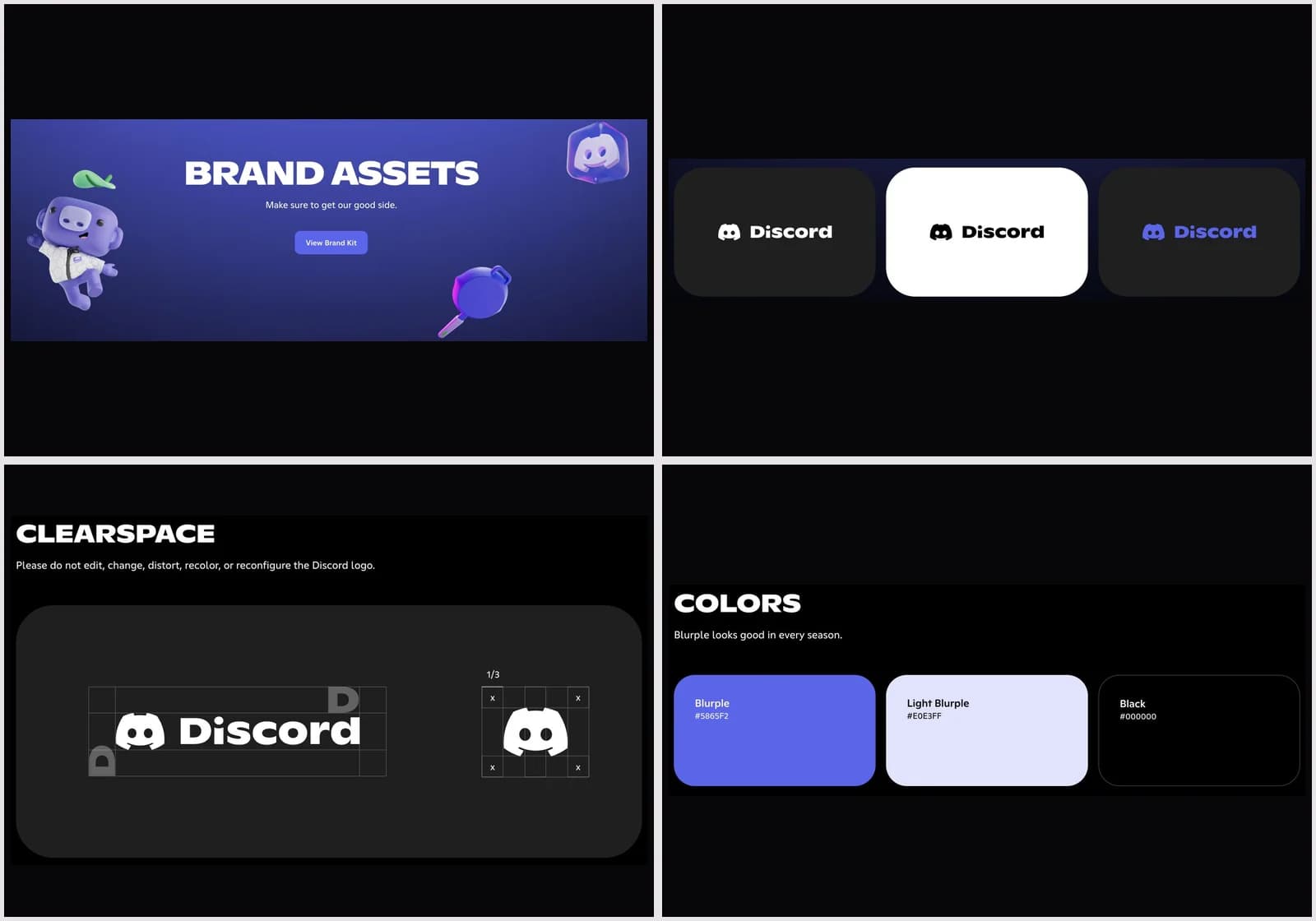
Discord provides logos, color values and spacing diagrams with instructions for using them. This is a brand asset guide, rather than a complete press kit.
Compare more categories, work samples and ways to present an audience. Open any kit to see the full version.
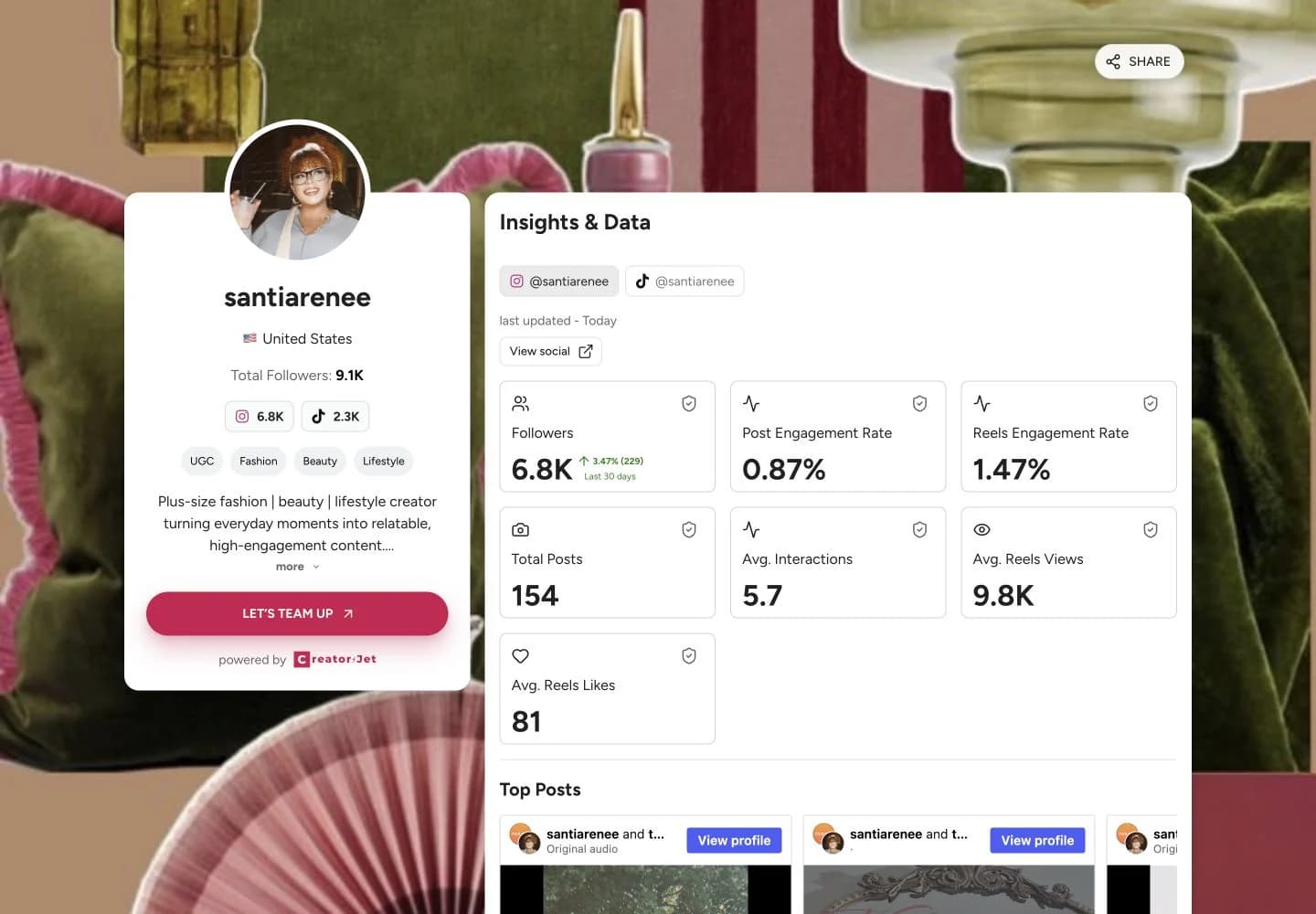
Santiarenee presents her plus-size fashion focus with separate Instagram and TikTok figures, making each audience easy to compare.
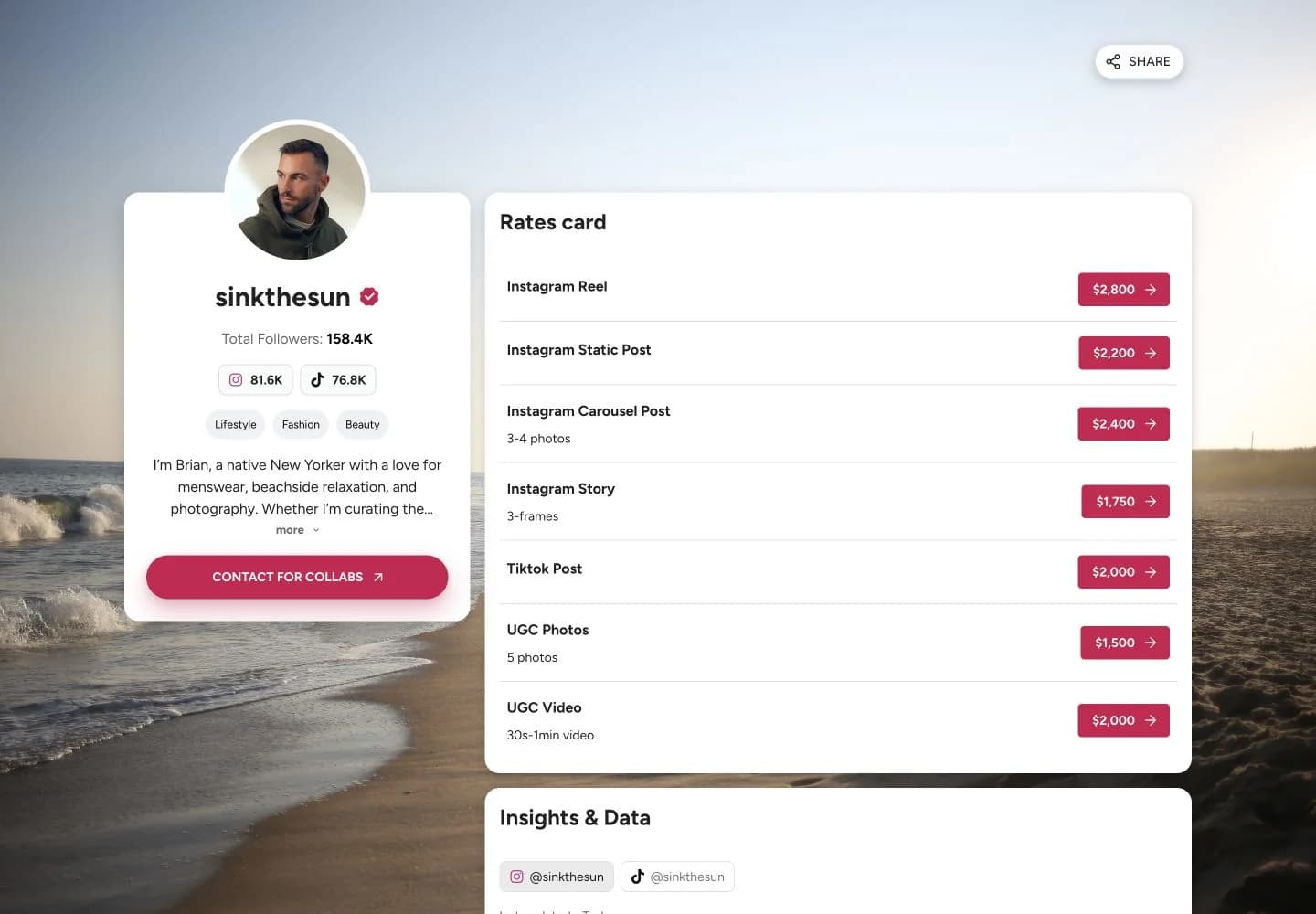
Sinkthesun lists Reels, photos, carousels, Stories and UGC separately so brands can compare collaboration formats.
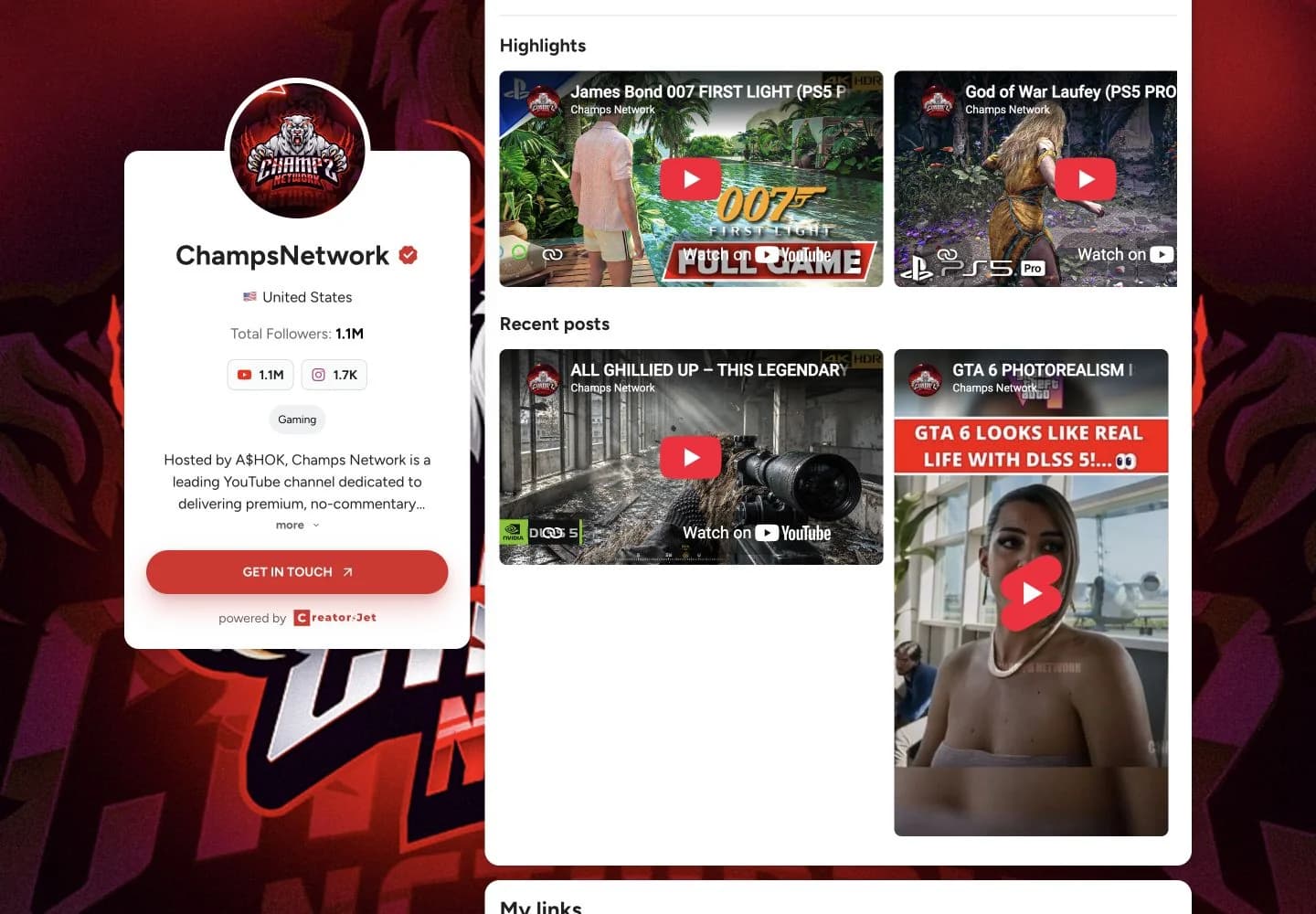
ChampsNetwork combines gameplay previews with YouTube audience figures, showing both the content and who it reaches.
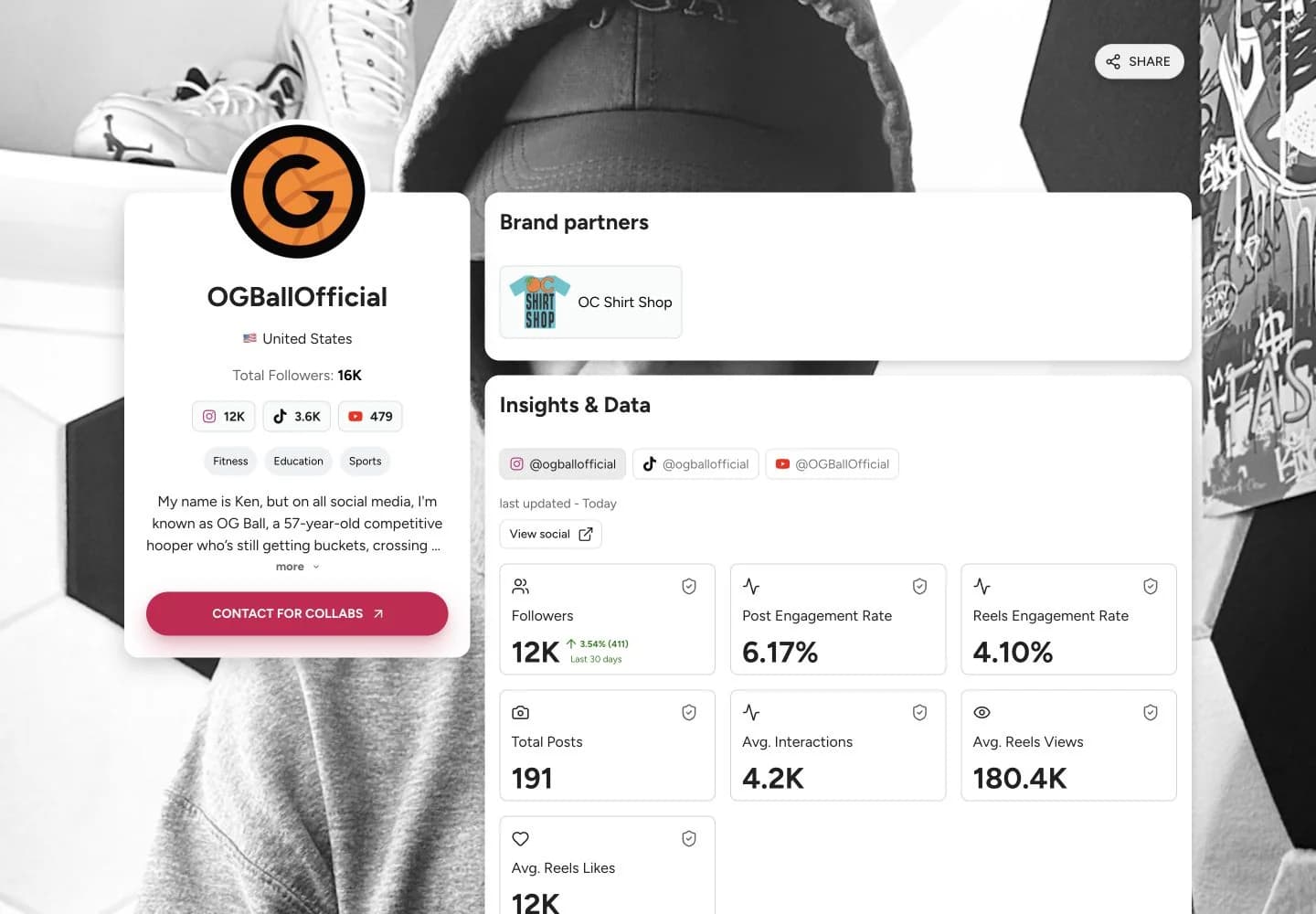
OGBallOfficial brings his basketball background, brand partners and audience statistics together in one profile.
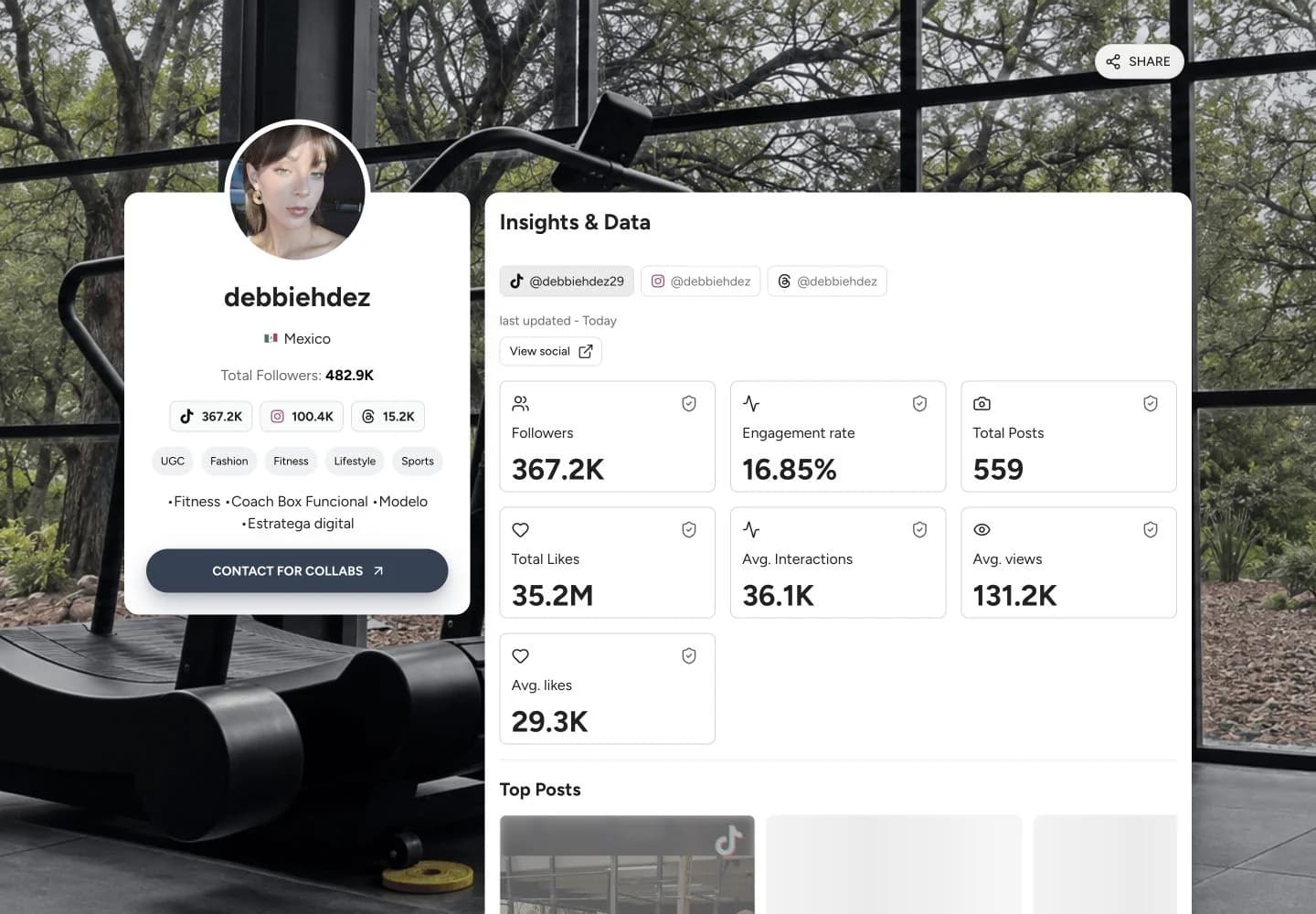
Debbie’s compact bio covers fitness, coaching and modeling, giving brands a quick overview of her specialties alongside her social statistics.
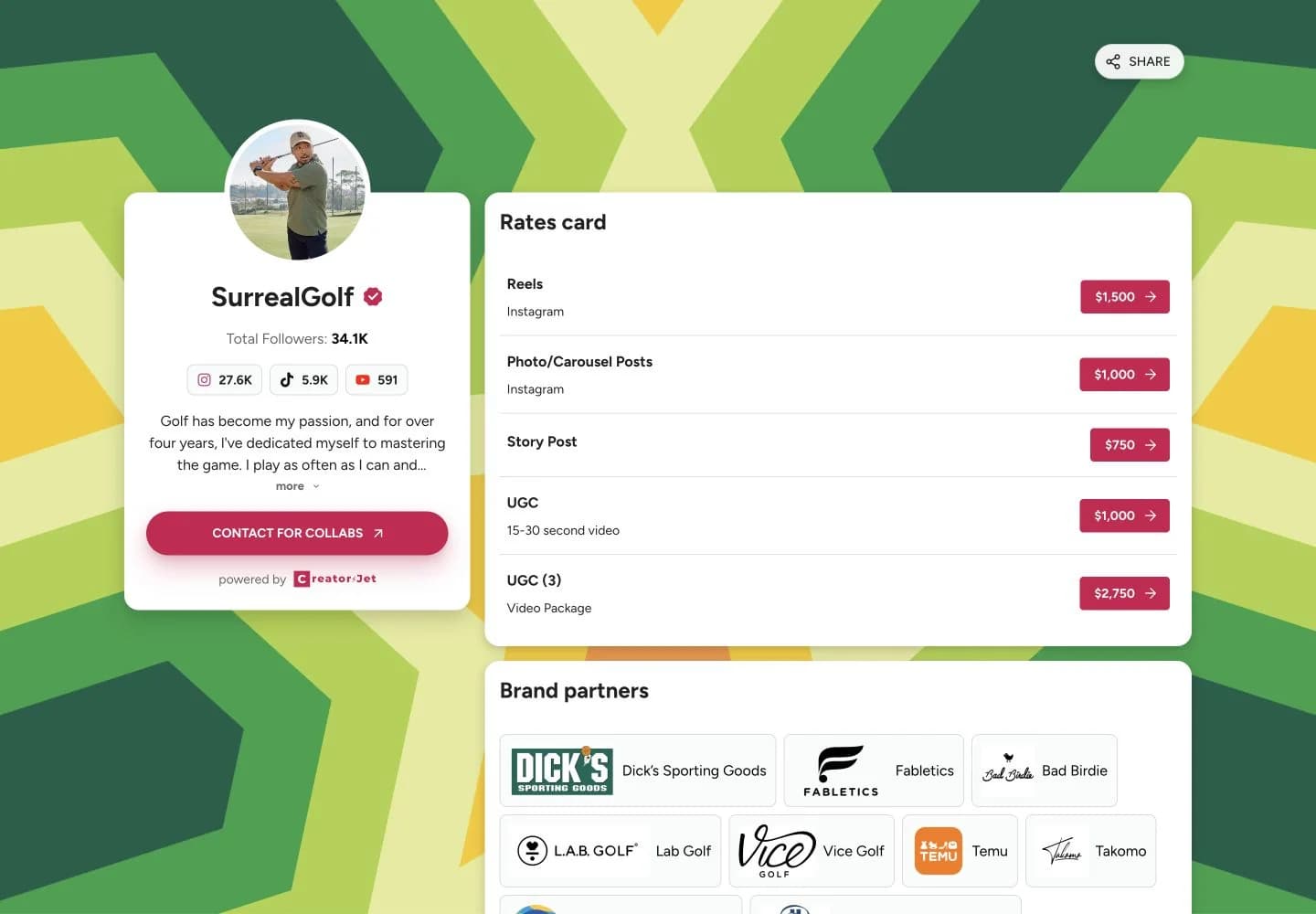
SurrealGolf organizes Reels, photos, Stories, UGC and YouTube packages in a rate card that makes the options easy to compare.
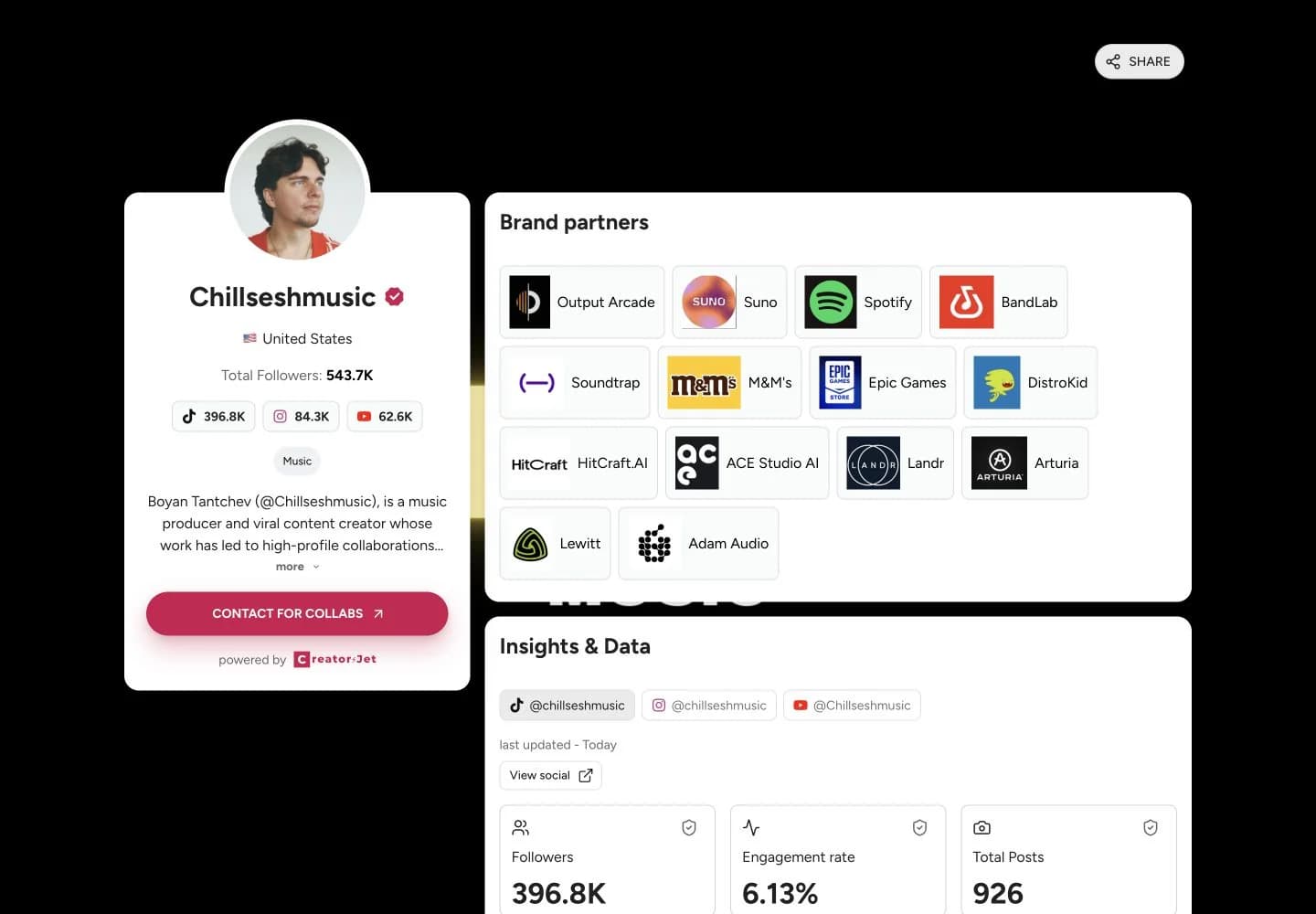
Chillseshmusic places brand partners in a dedicated panel above his social statistics, making previous collaborations easy to spot.
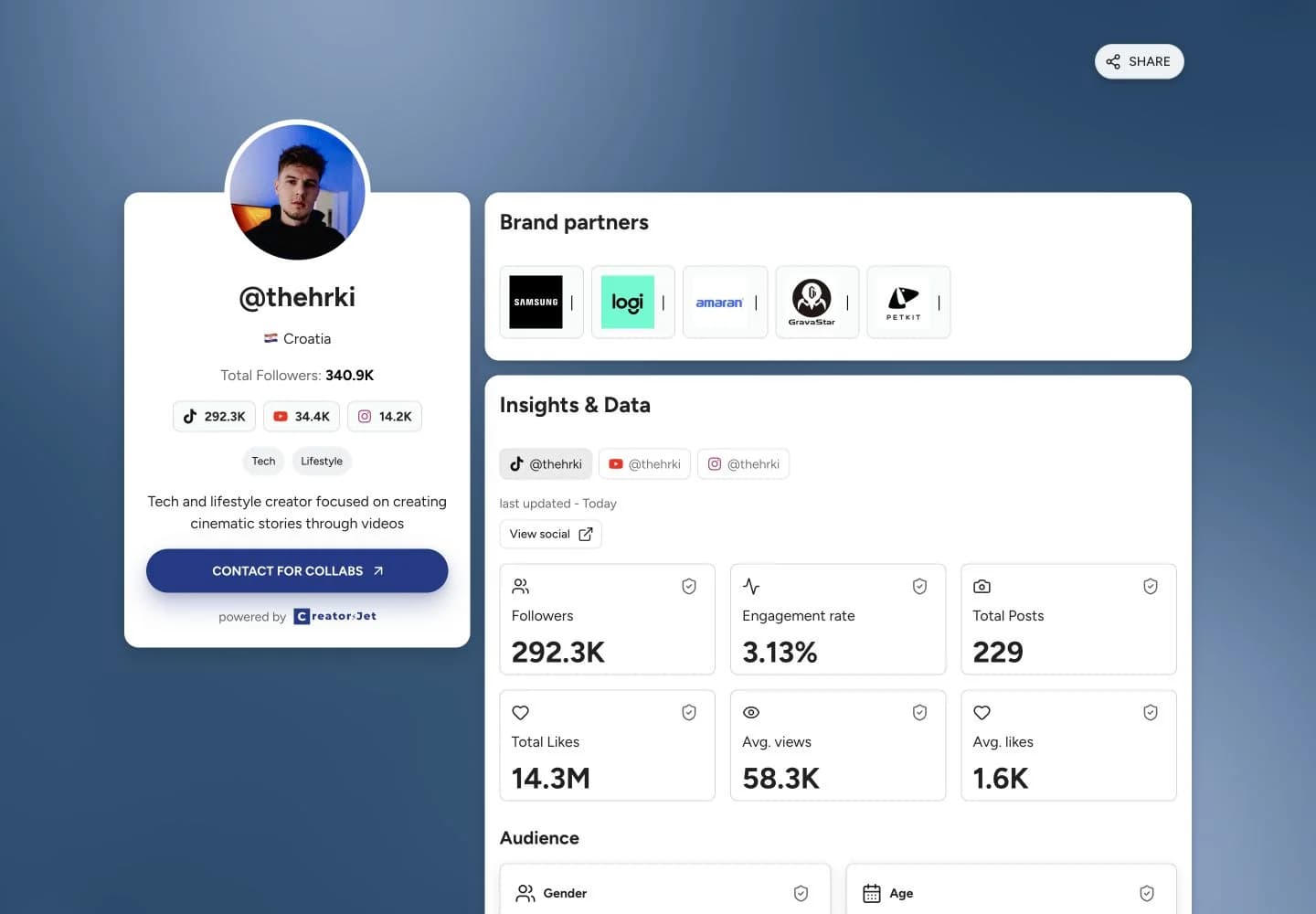
Thehrki pairs a short tech and lifestyle bio with partner logos and platform statistics for a quick overview of his work.
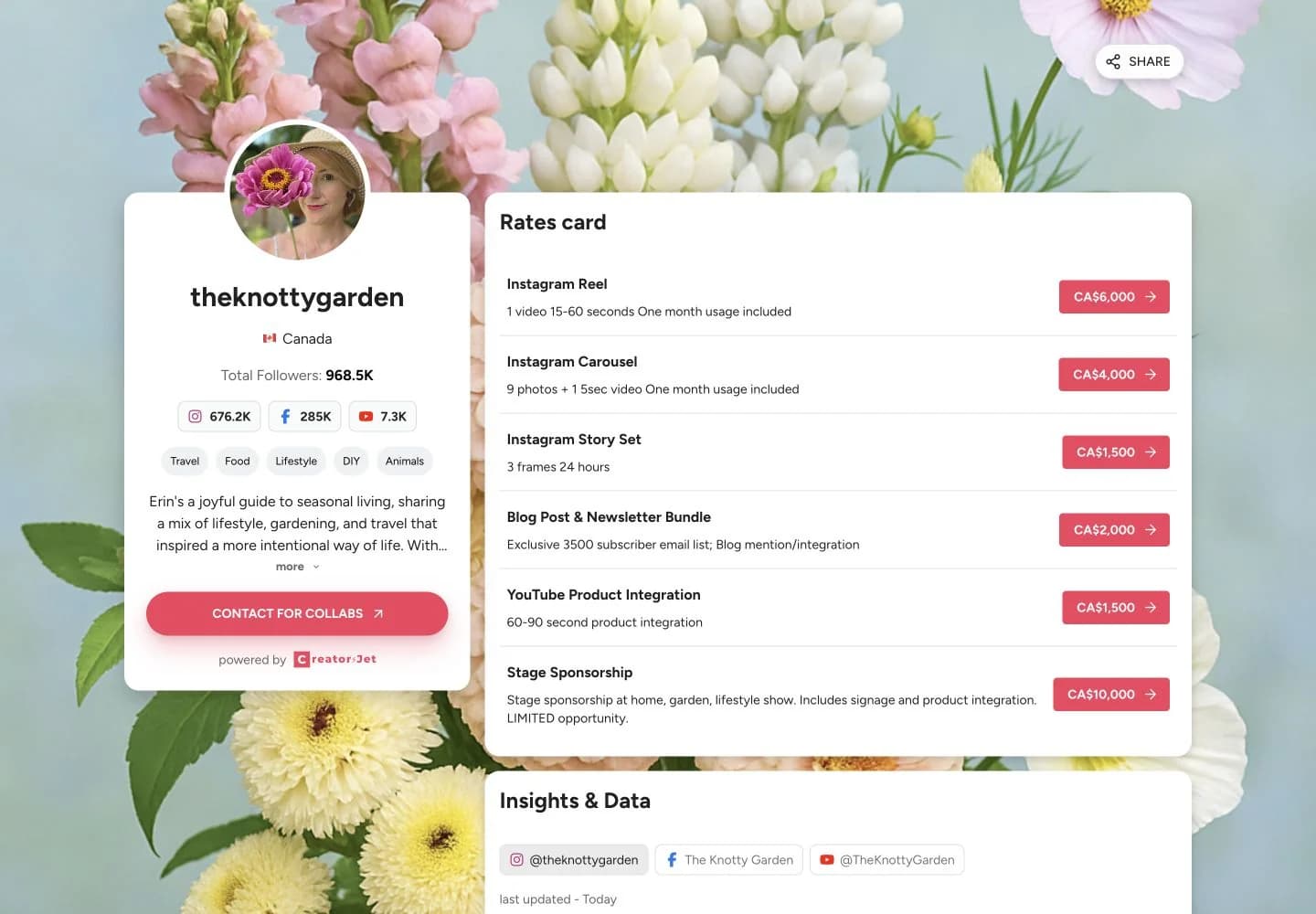
Theknottygarden offers individual formats alongside a package combining Reels, Stories and image usage rights.
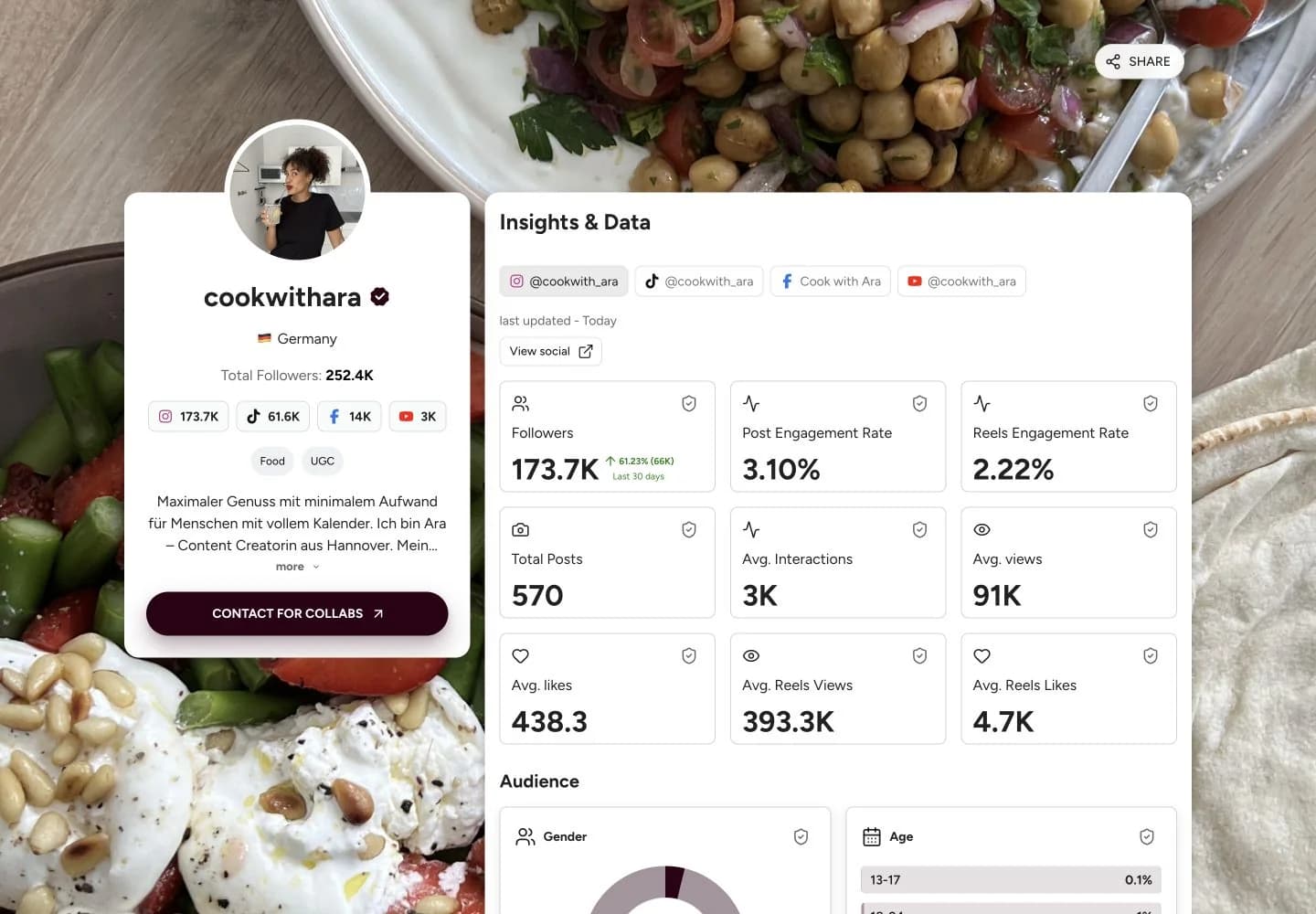
Cookwithara introduces her quick recipes for busy people and links to each social platform, making her content focus clear.
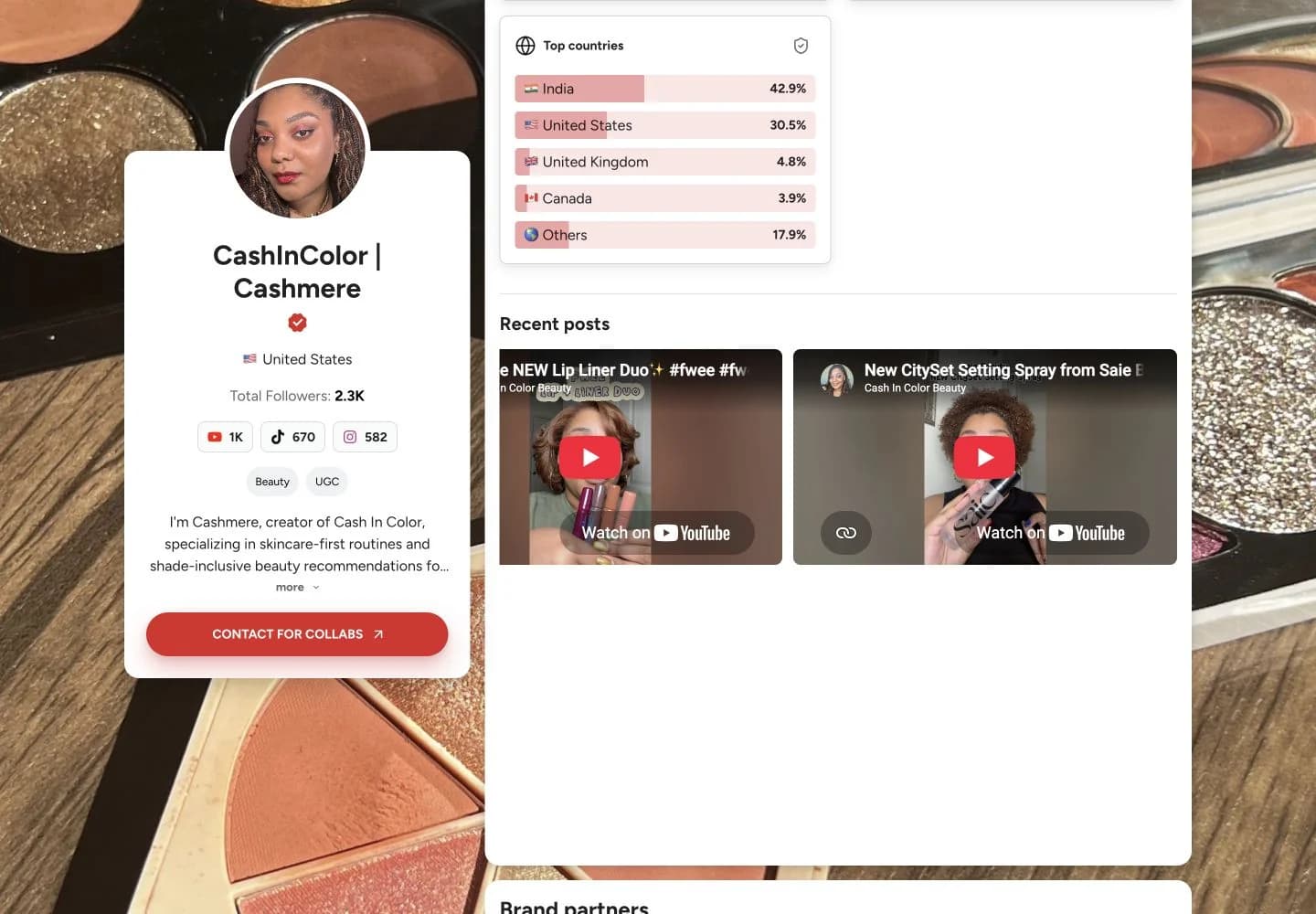
Cashmere pairs her skincare and shade-inclusive beauty focus with product video previews that show her approach in practice.
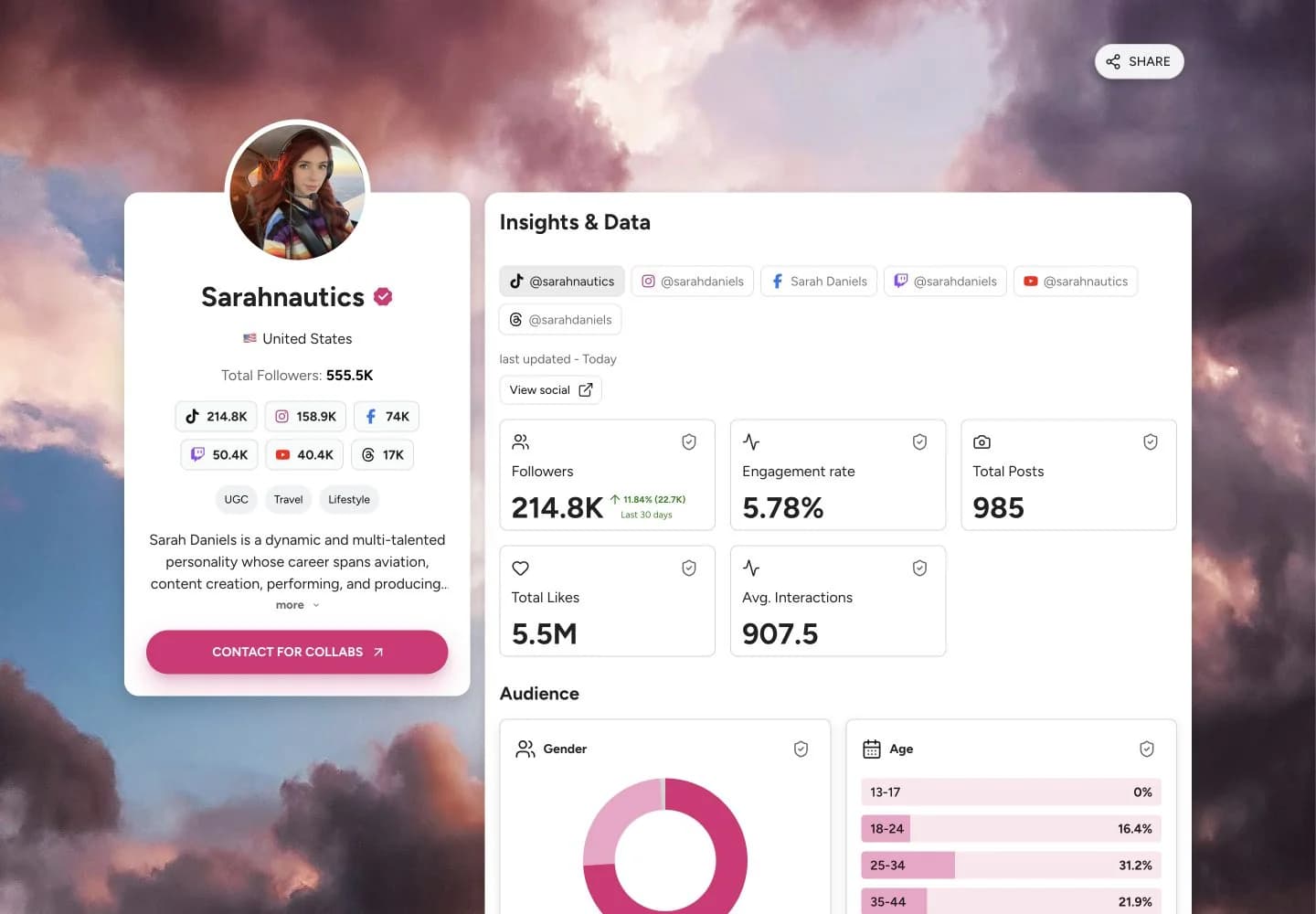
Sarahnautics highlights her aviation background and gathers several social platforms in one kit, connecting her experience with her online presence.
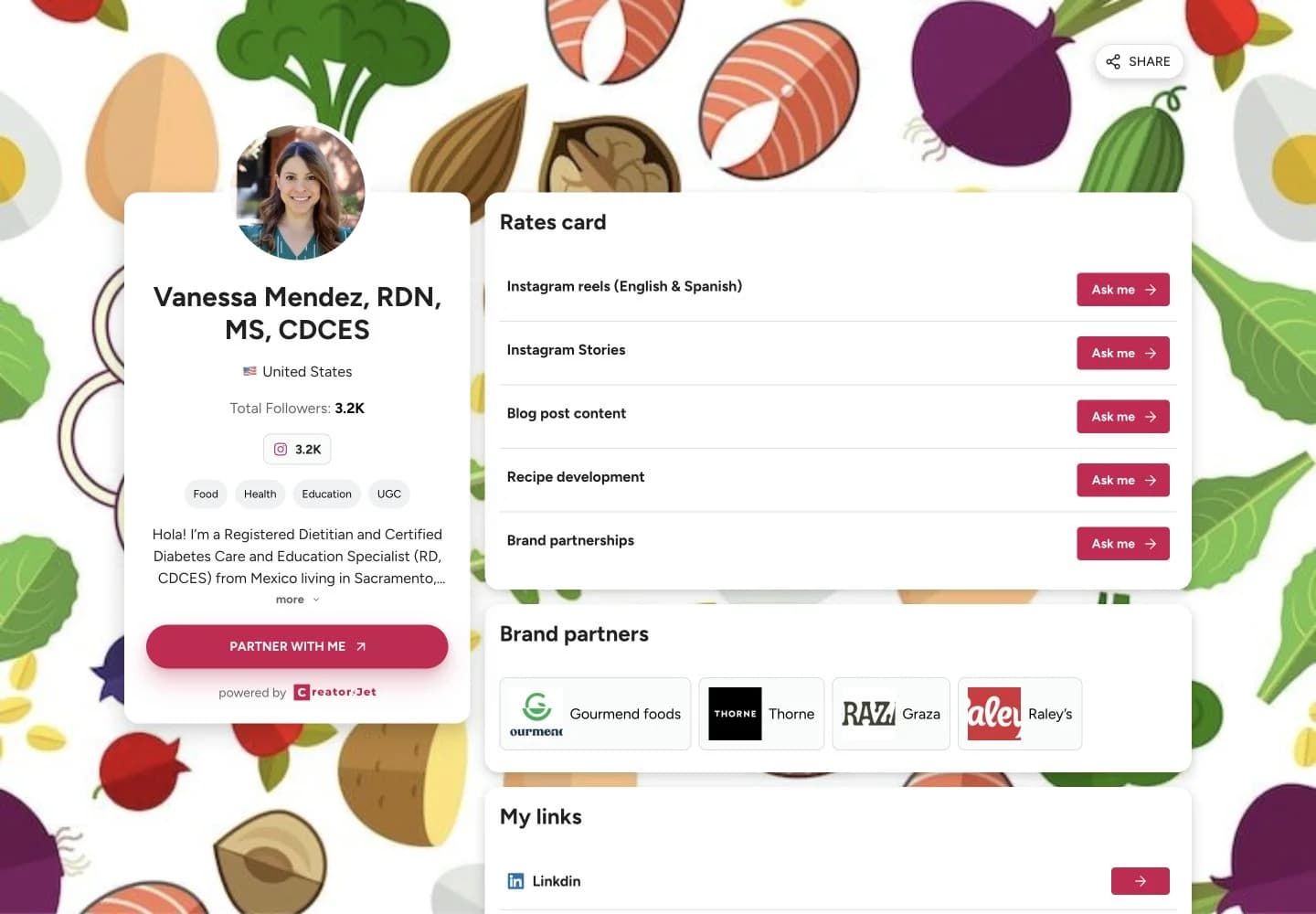
Vanessa Mendez connects her nutrition qualifications with services such as bilingual Reels and recipe development.
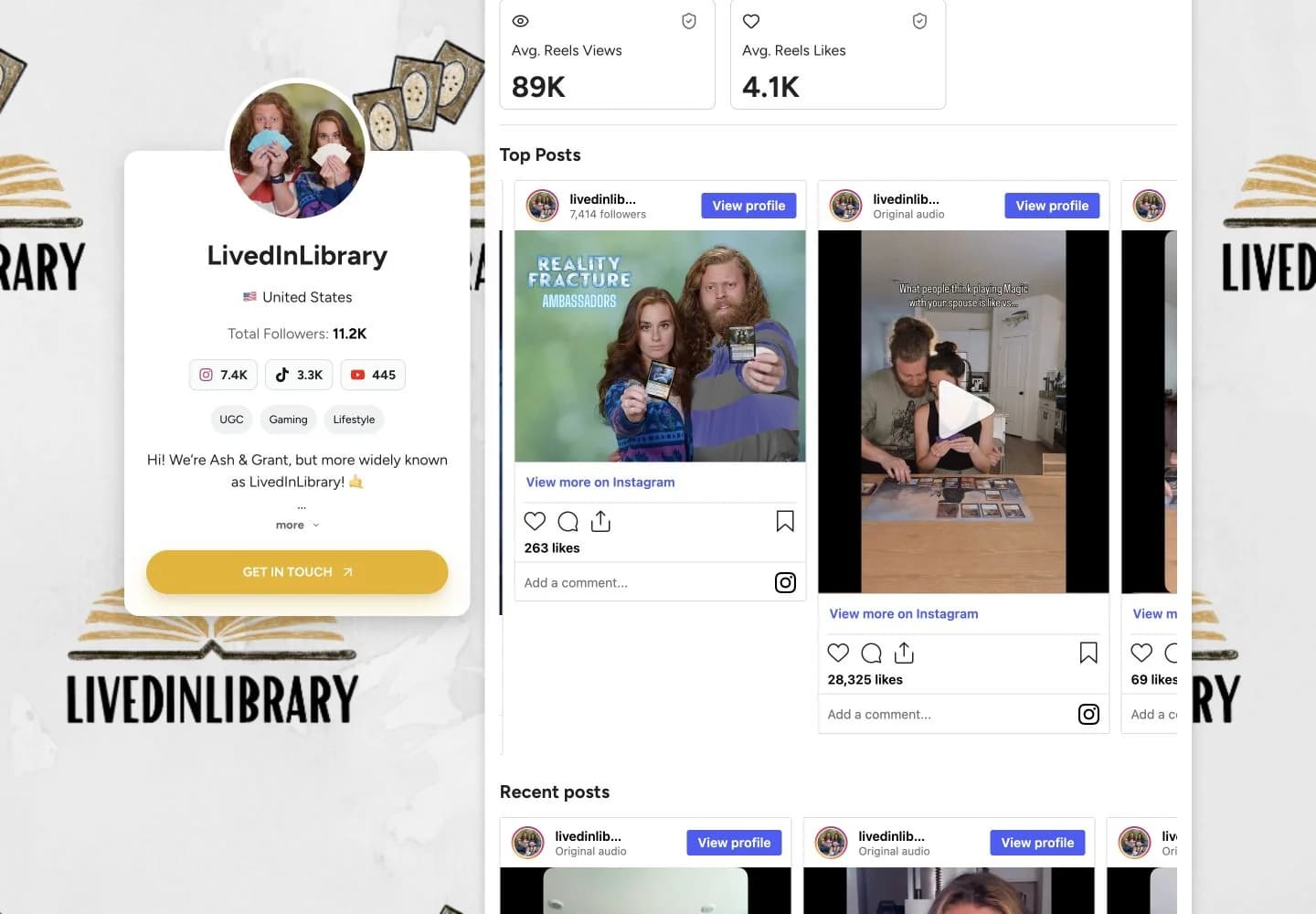
LivedInLibrary introduces the couple behind the account and uses Magic: The Gathering video previews to show their content style.
Choose the structure that fits the person reading your kit. You do not need every section from every example.
A short introduction, relevant work samples, audience information, collaboration options and a contact email.
Audience reach with clear definitions, reader interests, available formats, deadlines and a sales contact.
Examples of the content you create, clearly named services, deliverables and a simple way to discuss a brief.
A company overview, key facts, a press contact and downloadable logos and photographs. Make the assets easy to find and explain how they may be used.
Building a creator kit? Our influencer media kit guide explains what to include and how to put it together.
Read the influencer media kit guideThe terms sometimes overlap. A creator or publisher media kit usually supports a commercial partnership, with audience information and offers. A company press kit helps journalists cover the business, with facts, images and media contacts.
A link lets you update the content without sending a new file. A PDF is useful when someone requests an attachment or needs a saved copy. Choose the format your recipient can access easily.
You can use their structure for inspiration. Write your own introduction, use your own images and figures, and only list partnerships you actually had. The linked kits belong to their respective creators and companies.
Most media kits include a short bio, your social profiles, audience statistics, two or three relevant work samples, the services or packages you offer and a contact email. A publisher adds its advertising formats and rates. A company press kit adds key facts, logos and photographs.
Include enough to answer the reader’s next questions, then make the detail easy to find. Start with who you are, relevant evidence and how to get in touch. Add rates, audience breakdowns or press assets when they serve that purpose.
Bring your content, audience and collaboration details together in one shareable link.

CreatorsJet helps influencers and creators build professional media kits in minutes. Pitch brands with your work, stats and rates in one link.
Ask your favorite AI for a second opinion.
© 2026 CreatorsJet. All rights reserved.


